Footprints: When the flood hit Kartarpur



BY now, everyone has seen the iconic pictures of Gurdwara Darbar Sahib at Kartarpur submerged in floodwaters. This is the story of how we got those pictures, and what I saw along the way.
The first images from Kartarpur appeared on social and mainstream media on Wednesday. These were filmed by rescue officials during efforts to evacuate households on the premises — the families of the shrine’s caretakers and others.
They were all evacuated by boat, as the water level inside the Kartarpur complex was too high to venture in any other way.
We arrived in Narowal after nightfall on Thursday, and despite requests from our newsroom, we were unable to immediately secure any usable photographs.
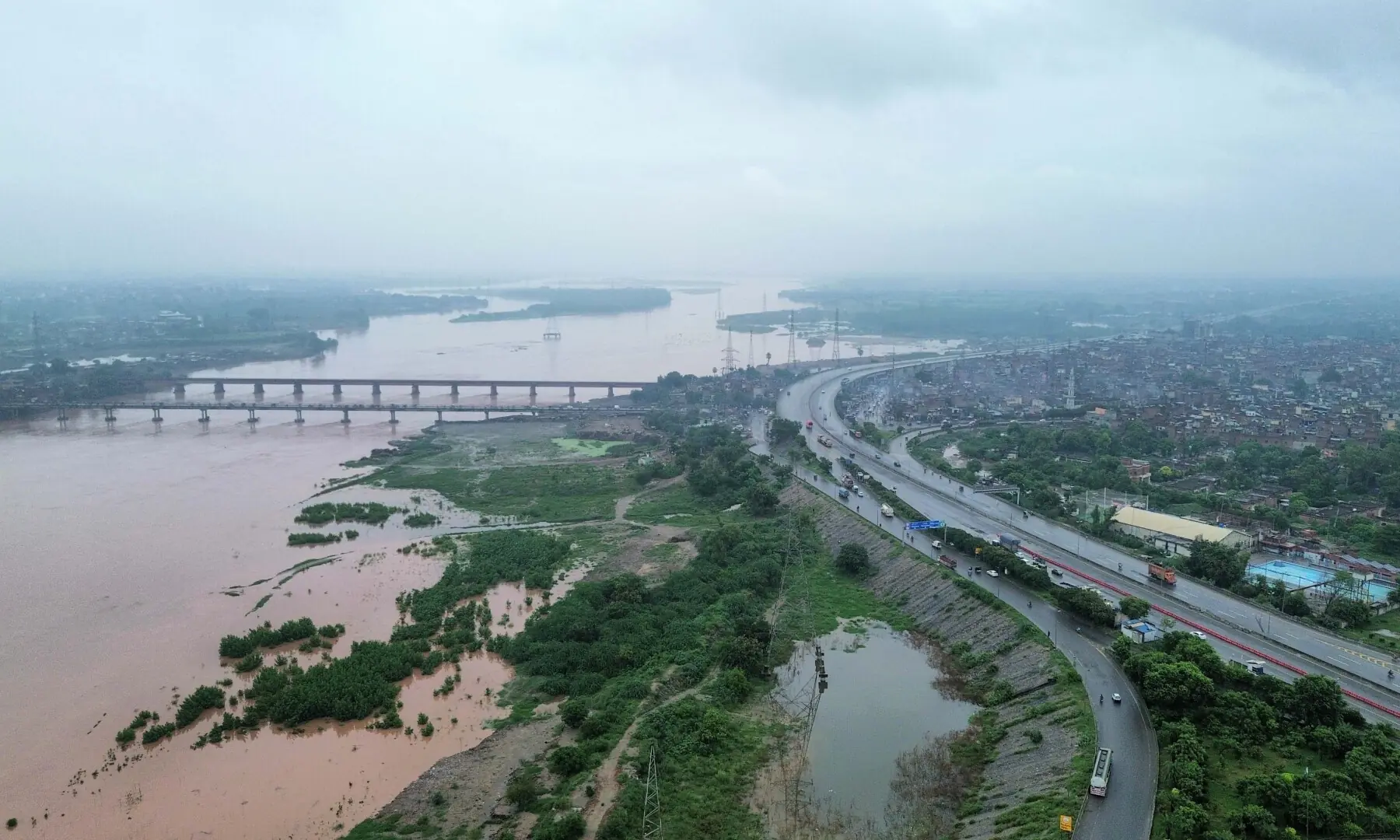
Although Narowal city was spared, its suburbs and the villages and tehsils on its outskirts bore the brunt of the waters that came pouring out of the Ravi and the half a dozen rainwater drains (nullahs) that flow into the district from India. These include Nullah Dek, Basanter, Baen and Auj.
Abid Mehmood, our correspondent in the area, described their flow thus: “Auj and Baen enter the Ravi in Shakargarh tehsil before Kartarpur, while Basanter enters the river after Kartarpur. But this time, the force of the floodwater in the Ravi pushed back the water in these drains. This caused more damage.”
At this point, he says, the river has the capacity of around 150,000 cusecs, but it overflowed its banks upon receiving around 250,000 cusecs.
Getting to the gurdwara was no easy task. Drenched from the chest down, I held my camera aloft above my head as we hung onto a tractor trolley that was ferrying locals to and from the flooded villages around Kartarpur.
The trolley was filled to the brim, but I managed to find a foothold and hung on for dear life. Along the way, locals trying to escape the waters would call out to me: “Don’t go, you’ll fall,” or “watch yourself” are the most printable of the refrains yelled my way as we trundled towards the gurdwara.
Along the way, the tractor trolley picked up more and more marooned folk. Although authorities had mandated evacuation, there were still some holdouts who refused to leave their homes.
It was only after their houses were submerged that these people realised their mistake; I heard many a cry of “we’re doomed” and “everything is gone” from the roadsides.

In the morning, when we finally made it to Kartarpur complex, the only way to approach was by boat. We abandoned our vehicle around 1.5km away on Shakargarh Road and boarded a rescue boat, which took us to the gurdwara itself.
By this time, the structure had been evacuated; even the security check posts were submerged and empty. The main darbar on the ground floor was completely inundated, with only the upper storey untouched by the floodwaters.
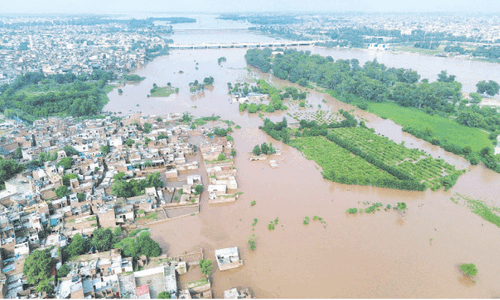
On our way back, the daylight offered some sobering perspective. There was only water all around as far as the eye could see, submerging fields and villages alike.
But there was still hope. Hiace vans were now ferrying stranded people to and fro along with their belongings. These were being operated by singer Abrarul Haq’s charity — the Sahara Trust — which also runs a hospital in the district.
According to our correspondent, Abid, the floodwaters hadn’t affected Narowal city as badly; it was the suburbs and villages on the outskirts that bore the brunt of the damage. According to one estimate, at least 145 villages were impacted, and their crops destroyed.
Abid says that water is now slowly receding from the rural tehsils, but it has already caused significant damage to agriculture, especially rice and fodder crops, as well as infrastructure, including the roads. “Narowal-Shakargarh road was closed while Narowal-Zafarwal road was submerged in the floodwater making travel on either impossible.”
In his words, locals know that if there is more heavy rainfall in the Ravi’s catchment areas (in India-held Kashmir), it could prove dangerous for Narowal. But if the downpour isn’t torrential, things would be fine.
Saba Chaudhry, a freelance journalist based in Narowal, told Dawn she was in Noorpur village near Shakargarh when the flood from Nullah Dek hit the area. Her village remained safe as it was located on higher ground, but there was floodwater all around.
“The main road on Manzoorpura Plot was completely submerged in two to three feet deep water.”
Noorpur and its surrounding villages become disconnected from the district headquarters, making travel in and out impossible.
On Friday, three days after Kartarpur and her village were submerged, she visited the gurdwara.
“The authorities had managed to drain the water from the complex, but floodwater still surrounds the building,” she says, adding that at least the roads have now reopened.
Published in Dawn, August 30th, 2025