
The smell hits you first. Earth, sweat and something almost sweet from the mustard oil.
Step inside an akhaarra [gymnasium, wrestling pit] in Androon [Walled City of] Lahore, and you’re stepping into a world that refuses to vanish, even as the city outside speeds past in motorbike roars and phone screens.
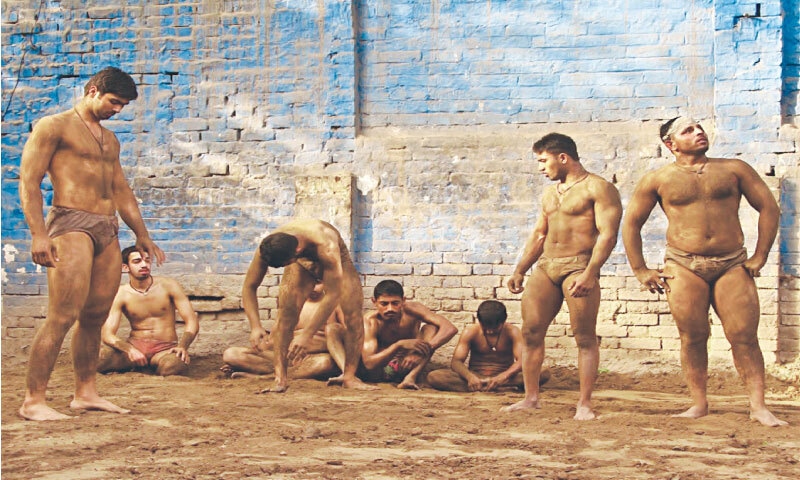
The pit is no fancy mat. It’s a rectangle of softened earth, tilled and watered each day, sifted through the fingers of ustads [teachers] who’ve done it the same way for decades. There’s no air-conditioning, no mirrors, no sound system. Only the scraping of feet, the deep breathing of men pushing their bodies to the limit and the quiet authority of a master watching from the side.
Here, kushti [wrestling] isn’t a sport for spectacle. It’s discipline, brotherhood and a code. You rise before dawn, rub the soil into your skin until it feels like a second body and face an opponent who’s also a brother. You win by pinning him down, but you lose nothing if you fight with heart. The handshake before and after matters as much as the throw in between.
Amidst the din of modernity, the ancient sport of kushti clings to life in Lahore’s Walled City. With no support and fading reverence, wrestlers persevere, finding honour not in fame, but in the sacred soil of the pit…
And yet, outside these mud walls, kushti is losing its grip. Even kabaddi — loud, colourful and bursting with rural fanfare — has more followers now in Punjab’s villages than wrestling. There’s no shame in kabaddi’s rise, but kushti’s quiet dignity doesn’t translate well to the noise of modern life.
Salman Arif stands out in this crowd. A man who has taken his skill from the soil to the mats, representing Pakistan on international forums, proving that tradition and modernity aren’t enemies. In the pit, he’s all grounded power. On the mat, he’s precision and speed. Ask him why he still comes back to the akhaarra, when he could stick to clean, sponsored tournaments, and he’ll tell you: “This is where the soul is.” You believe him, because in the dim light and the musk of earth, it’s hard not to.
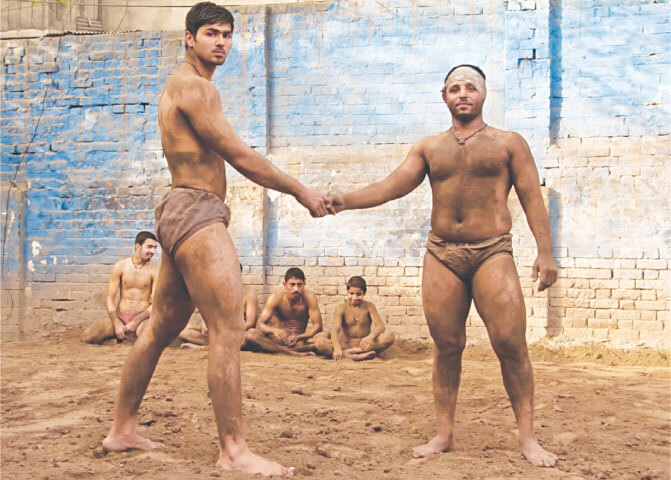
Ustad Khalid is one of the old-guard. Broad-shouldered, forearms like tree roots, eyes that don’t miss a thing. His pupils circle each other like tigers, then lock in a clinch that sends up a puff of dust. He says the biggest loss isn’t the number of wrestlers, but the loss of reverence. “To be a wrestler isn’t just to fight, it’s to master yourself,” he says. But discipline, humility and service are no longer easy sells to boys who can get instant glory with a cricket bat or a viral TikTok.
The younger wrestlers train hard, but they train in a vacuum. No state support, no sponsors, no professional leagues to sustain them. Diets of milk, almonds, desi ghee and meat are costly; many wrestlers can’t afford to follow them year-round. Matches are fewer and, often, they’re staged at events or small local festivals, with the crowd more interested in the buffet than the bout. And yet, they stay. Maybe because, in the circle of earth, they’re part of something bigger than themselves.
There’s an unspoken poetry to kushti that photographers can’t fully capture, even though they try; the way the wrestlers dig their toes into the soil like roots; the fine mist of dust rising when two bodies crash down; the stillness before the first grip.
There’s an unspoken poetry to kushti that photographers can’t fully capture, even though they try; the way the wrestlers dig their toes into the soil like roots; the fine mist of dust rising when two bodies crash down; the stillness before the first grip.
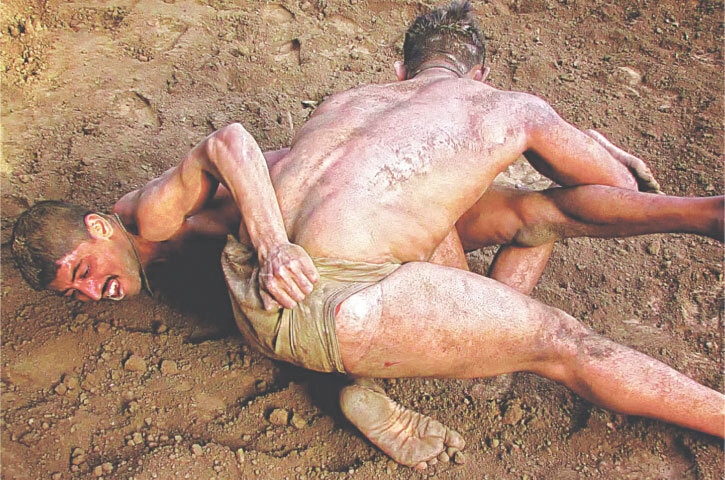
When you’re standing close enough, you hear every exhale, every grunt, every call from the ustad. The fight isn’t just strength — it’s leverage, timing, patience. Watching it is like watching a conversation where no one speaks, but everything is said.
Some akhaarras have closed shop; the land sold off, the pit filled with concrete. In their place are now shops, garages, or empty lots littered with plastic. But here, in the heart of the old city, some still hold out. The walls are chipped, the paint faded, but the rope around the pit is still taut. The boys still come, some barefoot, some in worn shorts. They warm up with squats and push-ups and, when they’re done, they sit shoulder-to-shoulder, sharing stories, rubbing oil into aching muscles.
It’s tempting to romanticise this, to imagine that grit alone can save kushti. But romance won’t pay for protein or travel to competitions. The truth is, unless there’s deliberate effort — from the state, from communities, from people with influence — the akhaarras will keep shrinking. And with each closure, Pakistan loses more than a sport. It loses a way of shaping men who value discipline over show, respect over fame.
Still, there’s something stubborn in this tradition. Like the soil itself, which is turned over daily, softened and made ready for the next match, kushti keeps finding a way to breathe. Every time a young boy steps into the pit for the first time, wide-eyed, the line is unbroken. Every time an ustad corrects a stance or praises a good throw, the chain holds.
When you leave the akhaarra, the sunlight outside feels harsher. The motorbikes are louder, the traffic heavier. You carry a bit of that earth with you — sometimes literally, stuck to your shoes, and sometimes, just in your head.
And you think of the men inside, wrestling not just each other, but time itself. It’s not a fair fight. Time always wins in the end. But there’s honour in going down swinging.
The writer is a banker by profession and lives in Lahore. X: @suhaibayaz
Published in Dawn, EOS, August 31st, 2025