Air Canada grounded as striking union defies order to get back to work
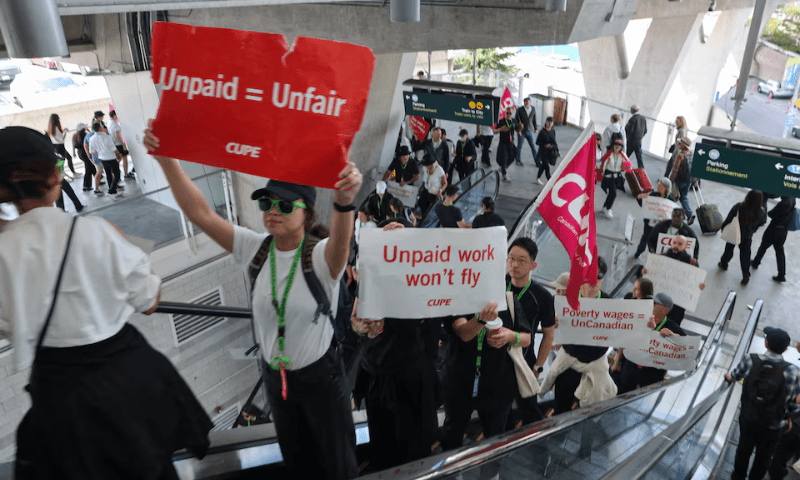


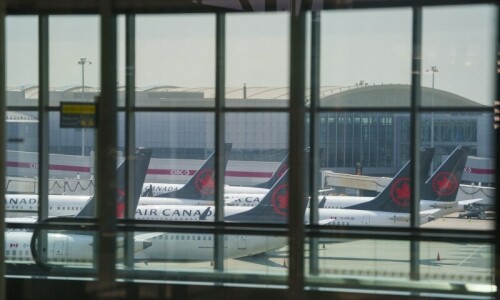
Air Canada’s fleet of hundreds of planes remained grounded on Monday morning after striking flight attendants refused a government-backed order to get back to work and called on the airline to return to the bargaining table.
The carrier, which normally carries 130,000 people daily and is part of the global Star Alliance of airlines, had planned to start ramping up operations on Sunday evening, after a labour relations board ordered the union to return to work and start binding arbitration.
The union said no, setting up an almost unprecedented standoff with the Canadian government, which had requested the back-to-work order.
The Canadian Union of Public Employees, which represents 10,000 Air Canada cabin crew, had pushed for a negotiated solution, saying binding arbitration would take pressure off the airline.
The attendants are striking for better wages and to be paid for work on the ground, such as boarding passengers. They are currently only paid when planes are moving, sparking some vocal support from Canadians on social media.
CUPE invited Air Canada back to the table to “negotiate a fair deal,” calling the order to end its strike unconstitutional. The airline said it would delay plans to restart operations from Sunday until Monday evening and described the union as illegally defying the labour board.
The government’s options to end the strike now include asking courts to enforce the order to return to work and seeking an expedited hearing. The minority government could also try to pass legislation that would need the support of political rivals and approval in both houses of parliament, which are on break until September 15.
“The government will be very reticent to be too heavy-handed because in Canada the Supreme Court has ruled that governments have to be very careful when they take away the right to strike, even for public sector workers that may be deemed essential,” said Dionne Pohler, professor of dispute resolution at Cornell University’s Industrial and Labour Relations School.
Another option is to encourage bargaining, Pohler said.
The government did not respond to requests for comment.
On Saturday, Prime Minister Mark Carney’s Liberal government moved to end the strike by asking the Canada Industrial Relations Board to order binding arbitration. The CIRB issued the order, which Air Canada had sought, and unionised flight attendants opposed.
The previous government, under former Prime Minister Justin Trudeau, intervened last year to head off rail and dock strikes that threatened to cripple the economy, but it is highly unusual for a union to defy a CIRB order.
The CUPE said its rejection was unprecedented when such an order was made according to rules, known as Section 107, that the government invoked in this case.
Travelers at Toronto Pearson International Airport over the weekend said they were confused and frustrated about when they would be able to fly. Italian Francesca Tondini, 50, sitting at the Toronto airport, said she supported the union even though she had no idea when she would be able to return home.
“They are right,” she said with a smile, pointing at the striking attendants. The dispute between cabin crews and Air Canada hinges on the way airlines compensate flight attendants. Most, including Air Canada, have traditionally paid them only when planes are in motion.
In their latest contract negotiations, flight attendants in both Canada and the United States have sought compensation for hours worked, including for tasks such as boarding passengers.
New labour agreements at American Airlines and Alaska Airlines legally require carriers to start the clock for paying flight attendants when passengers are boarding.
American’s flight attendants are now also compensated for some hours between flights. United Airlines’ cabin crews, who voted down a tentative contract deal last month, also want a similar provision.