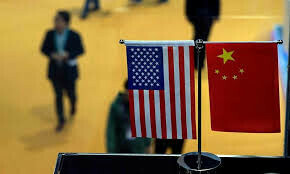
As Pakistan engages with the US on the details of a trade deal, one that includes partial tariff relief — reducing rates from 29 per cent to 19pc — and explores deeper commercial ties, including potential higher US imports and investment in key sectors, the private sector has responded with cautious optimism.
The rate reduction signifies a significant reversal of the tariff hike imposed on April 2, 2025, when Washington, under its ‘reciprocal tariffs’ policy, introduced additional duties on over 60 trading partners to address trade imbalances. These tariffs ranged from 10–50pc, with Pakistan initially placed in the higher bracket, alongside other developing states.
Beyond public statements by US President Trump and Pakistani leadership, detailed information about the trade deal remains scarce in the public domain. Key official sources, such as the US Department of Commerce, have yet to release details of the agreement.
The existing Trade and Investment Framework Agreement, signed in 2003, probably continues to serve as the main platform for bilateral discussions. In Pakistan as well, economic ministries have not yet published comprehensive details online.
While tariff relief is a positive development, industry experts caution that it addresses only one facet of Pakistan’s broader trade competitiveness challenges
However, media reports suggest that Pakistan has agreed to offer duty-free access to US goods and facilitate American investment in key sectors such as oil, minerals and crypto. Reportedly, over 4,000 US products now face zero tariffs in Pakistan.
“The goal is to translate recent diplomatic progress into tangible economic gains,” a senior official shared in confidence. “We are hopeful for further tariff concessions, particularly in light of rising imports of oil and other goods from the US. Currently, the trade balance is in our favour, though the total volume is relatively modest.
“Now the onus is on the private sector. They must rise to the occasion and capitalise on the relative advantage this agreement offers over regional competitors in the US market,” he added.
Following recent developments, a Pakistani refinery has secured a crude oil shipment from the United States, expected to arrive soon.
Usama Qureshi, Vice Chairman, Cnergyico Pk Ltd, confirmed the oil deal, stating, “The government encouraged the refining sector to explore US crude imports as part of efforts to strengthen bilateral trade. We evaluated West Texas Intermediate for its pricing, yield benefits and freight economics. Once we found it commercially viable, we finalised the deal. If the results of the first cargo prove favourable, we may scale up imports to as much as one million barrels per month.”
Haroon Akhtar, Special Advisor to the Prime Minister on Industries and Production, currently on an official visit to Osaka, Japan, responded promptly to queries and shared an optimistic view of the evolving trade engagement with the United States.
“Pakistan has exportable surplus capacities in several industries, especially in value-added textiles, which hold strong potential for increased exports,” he noted.
He clarified that trade talks with the US are being formally led by the ministry of commerce. “I serve on the prime minister’s steering committee overseeing trade terms, but the ministry of industries is not part of the negotiating team,” he added.
Commenting on private sector involvement, Mr Akhtar said, “Extensive consultations were held with private businesses at every stage of the negotiation process.”
The duty reduction has strengthened Pakistan’s competitive position in the US market. While regional rivals like Bangladesh, Sri Lanka and Vietnam face 20pc tariff, and India up to 50pc, Pakistani exports now benefit from a comparatively lower 19pc rate. The US remains one of Pakistan’s top export destinations, with the trade surplus largely driven by textile shipments.
According to the US trade representative, total bilateral trade in goods and services between the US and Pakistan reached $10.1 billion in 2024. This comprised $7.2bn in goods trade and $2.9bn in services. The US recorded a $3bn goods trade deficit, with exports to Pakistan at $2.1bn and imports from Pakistan at $5.1bn. In services, however, the US held a modest surplus of $610m, exporting $1.7bn worth and importing $1.1bn.
While tariff relief is a positive development, industry experts caution that it addresses only one facet of Pakistan’s broader trade competitiveness challenges. Structural bottlenecks, such as high energy costs, complex tax and refund procedures, and erratic policy changes, continue to undermine the country’s ability to fully leverage international market opportunities.
Contrary to Mr Akhtar, Dr Khurram Tariq, former president of the Faisalabad Chamber and current Chairman of Kay and Emms, expressed disappointment over the exclusion of private sector representatives from US trade deal talks. “I was part of the planning working group, but none of the four private sector members were taken on the negotiation trip, even though we offered to self-finance,” he said.
While acknowledging the 1pc edge over Bangladesh, Sri Lanka and Vietnam, he called it “notional” given Pakistan’s far higher production costs due to elevated interest rates and energy prices. “If we had parity with countries facing 10pc additional tariffs, like Turkey or Egypt, it could have significantly boosted exports and helped address our foreign exchange needs,” he added.
Musadiq Zulqarnain, a prominent exporter, supported government-led trade talks, citing the diverse interests across sectors. “While textiles and apparel are key, other products matter too, and the talks go beyond exports to broader trade and investment. Taking businessmen along could complicate things. That said, the government has remained in consultation, both locally and during talks. I have personally been in touch throughout,” he noted.
Published in Dawn, The Business and Finance Weekly, August 18th, 2025