Plastic pollution is one of the most severe forms of pollution because, once created, it takes hundreds of years to break down in the environment. It is also one of the few types of pollution that equally impacts land, air, and water.
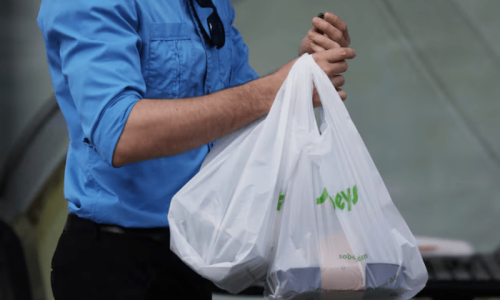
The primary contributor is single-use plastic products, with plastic shopping bags being the most significant. In countries like ours, the low cost and the lack of equally convenient safe alternatives are the two main reasons for their ever-increasing use. Plastic particles suspended in the air are a major cause of air pollution and contribute to smog during the winter season. Additionally, the dumping of plastic bags into water bodies, which eventually flow into the sea, significantly harms marine life.
The world became aware of the disastrous environmental impacts of plastic pollution in the late 1980s, and many developing countries, including Pakistan, began efforts to control it in the late 1990s. However, they still continue to struggle to eliminate it from the market.
Before the 18th Amendment, the federal government attempted to ban single-use plastic bags by restricting their manufacturing based on thickness and size. These bans produced temporary results, but the long-standing habit of using cheap, disposable plastic bags soon resurfaced. After the 18th Amendment, each province has been grappling with efforts to ban this menace, but unfortunately, these efforts have largely been unsuccessful, often remaining confined to paper; the government has often been criticised for creating policies on paper that lack effective implementation in practice.
If the supply of plastic bags is banned, demand will naturally shift to the eco-friendly alternatives permitted to meet consumer needs
The efforts to ban plastic bags in Pakistan, particularly in Sindh, have faced significant challenges despite government initiatives. While the government has repeatedly attempted to enforce bans, various obstacles have consistently hindered progress. For instance, the Sindh government has been striving to ban plastic bags since 1998 but has largely faced setbacks due to peculiar reasons.
In the late 1990s, black plastic bags were banned in Sindh because of their cancer-causing substances. However, resistance from the hardware retail sector led to their continued availability in the undocumented black market, where plastic manufacturing operates unregulated.
In 2004, Sindh ambitiously imposed a ban on plastic bags thinner than 30 microns. Unfortunately, plastic bag manufacturers successfully opposed it, citing the potential loss of 60,000 jobs in the sector. Weak enforcement and a lack of consumer cooperation, driven by insufficient awareness of the environmental and health hazards of plastic bags, were the two primary reasons for the ban’s failure, and both issues were closely tied to the widespread availability of plastic bags in the market.
That said, theoretically, if plastic bags were entirely removed from circulation, consumers would likely adapt quickly, reverting to practices from the early 1980s when cloth bags and straw baskets were commonly used.
The recent ban on all types of plastic bags in Sindh is encountering familiar challenges, with the government striving to engage all stakeholders to ensure success this time. However, within just a week of the ban’s enforcement, resistance from the supply side surfaced, prompting regulators to seek a balanced solution that supports the ban while addressing the business interests of affected sectors. This approach aims to find common ground, fostering cooperation to achieve positive outcomes for all parties involved.
If the supply chain for plastic bags is completely eliminated, manufacturers would need to adapt to the non-availability of raw materials or face heavy taxes designed to reduce their profit margins. These manufacturers are key players, and as long as they resist a complete ban, efforts to eradicate plastic bags will continue indefinitely.
A straightforward solution would be to prohibit the production of plastic bags, compelling manufacturers to shift to eco-friendly alternatives. They often claim concern over the higher costs of these alternatives, arguing that they are unaffordable for the lower-middle-income group and poor consumers. In reality, their primary worry is the reduced profit margins, as it is well-established that eco-friendly alternatives do not offer the same high profitability as plastic bags.
Initially, eco-friendly products may have a higher per-unit cost due to lower production volumes. However, as demand grows and production scales, prices could decrease to more reasonable levels. This price reduction depends on the willingness of manufacturers, wholesalers and retailers to accept lower profit margins. Embracing these alternatives requires a collective commitment to sustainability over short-term financial gains.
Numerous research studies, both local and global, confirm that the primary resistance to plastic bag bans comes from the supply side, which has the resources to oppose such measures through various means. This is particularly evident in Pakistan, where plastic manufacturers frequently challenge bans in court when imposed by authorised entities.
In developing African countries, the failure to enforce plastic bag bans is largely attributed to plastic manufacturers, who are deeply entrenched in political and administrative systems. In Pakistan, the documented plastic bag manufacturing sector accounts for only 30 per cent of the market share, while the remaining 70pc is untraceable, potentially consisting of black-market operations, undocumented production, or illegal activities by documented manufacturers.
However, there is no verified data available to confirm the market share distribution of the plastic bag industry in Pakistan. This lack of reliable information creates ambiguity regarding who is manufacturing what within the country’s plastic industry.
If John Maynard Keynes were alive today, even he might struggle to determine who bears greater responsibility for the failure to ban plastic bags in Pakistan.
Supply-side economics faces pressures that discourage a shift to eco-friendly alternatives, often citing higher costs but primarily driven by lower profit margins. On the demand side, consumers, though not fully aware of the harms of plastic bags, have little choice but to use the convenient options available in the market.
If plastic bags are cheap, consumers will buy them readily; if they are expensive, consumers will use them more cautiously and for longer periods. It is misguided to blame the demand-side economy under the pretext that supply will persist as long as demand exists. Instead, the perspective should be reversed: if the supply of plastic bags is banned, demand will naturally shift to the eco-friendly alternatives permitted to meet consumer needs.
The writer is an environmental awareness activist and author
Email: baigmujtaba7@gmail.com
Published in Dawn, The Business and Finance Weekly, July 21st, 2025