0
0
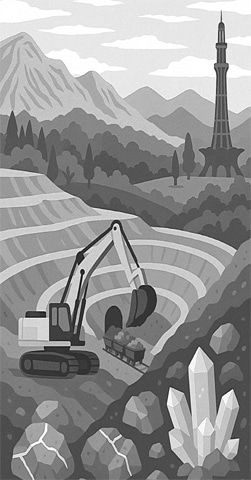
MINING surely plays a pivotal role in the economic development of countries endowed with natural resources. While Chile and Peru are long-standing leaders in copper and gold production, Pakistan is now beginning to explore and realise its substantial mineral potential. With large untapped reserves and key strategic partnerships, Pakistan currently stands on the brink of a mining-driven economic transformation.
Chile remains the world’s top copper producer, supplying nearly 30 per cent of the global output, with copper exports contributing over half of its total export earnings. Peru ranks second on the list, and is also a leading gold exporter. The mining sector in Peru contributes around 10pc to the gross domestic product (GDP) and more than 60pc of national exports, showcasing how a mature mining sector can anchor economic growth.
Pakistan is rich in mineral resources, but is still in the early phases of mining sector development. Significant deposits, including 32.6 metric tonnes of gold in Attock, and 13.1 million tonnes of copper in the Reko Diq region, highlight the country’s untapped wealth, noted the Geological Survey of Pakistan in 2023. The Reko Diq project alone is expected to generate up to $74 billion in long-term returns. However, substantial investment in infrastructure, regulation and mining governance is needed to fully realise these benefits.
Botswana provides a compelling example of how transparent governance and responsible reinvestment of mining revenues can elevate a nation.
Once among Africa’s poorest, Botswana transitioned to middle-income status by strategically managing its diamond sector, and directing profits into public service projects. This success underscores the power of good governance and forward-looking policy; the very principles that Pakistan needs to follow in its own context.
Similarly, Tanzania offers an instructive comparison through its small-scale mining sector. Regions like Geita, Shinyanga and Mara have experienced economic revitalisation due to artisanal mining. Government reforms have improved price transparency, safety standards and formalisation efforts.
Small-scale mining now contributes significantly to employment and household incomes, demonstrating how inclusive mining policy can fuel grassroots development. Pakistan could draw from this experience, particularly in areas like Balochistan and Khyber Pakhtunkhwa (KP) where informal mining is rampant.
A major opportunity for Pakistan lies in its strategic partnership with Oman whose technical capabilities, proximity and access to Gulf markets make it an ideal partner to have. This collaboration can support Pakistan in moving beyond raw mineral exports to value-added production, boosting revenue, job creation and regional trade integration.
Environmental and social concerns are common challenges across mining economies. Chile and Peru also faced public unrest tied to environmental degradation and inequitable benefit sharing. Pakistan can avoid such pitfalls by proactively incorporating the elements of environmental safeguards, community engagement and sustainable practices into its mining governance from the outset.
Pakistan’s mineral wealth presents a powerful opportunity for economic re-newal. Large-scale projects and inter-national alliances offer a solid foundation.
By learning from Botswana’s governance, Tanzania’s small-scale mining integration, and global best practices, Pakistan can transform its resource potential into lasting and inclusive national development.
Zahid Maqsood Sheikh
Lahore
Published in Dawn, July 19th, 2025