One billion Africans being harmed by cooking pollution
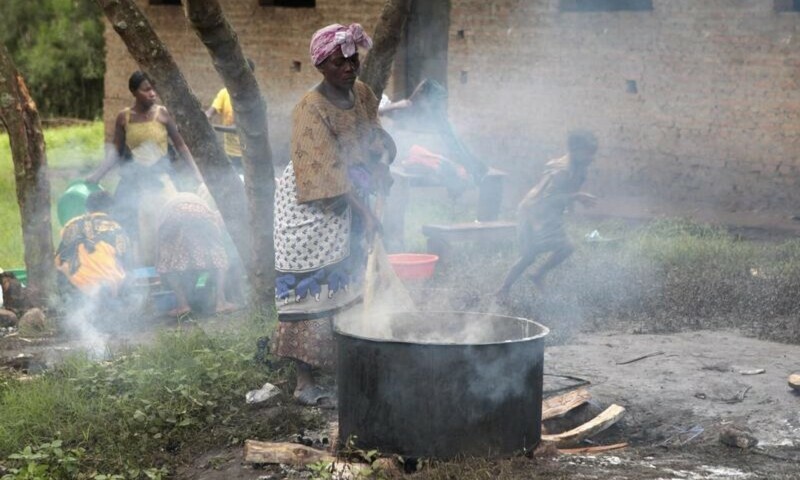
One billion Africans have to cook on open fires or with fuel that is hazardous to their health and the environment, the International Energy Agency said on Friday.
The problem, which its report says can be easily solved, causes as much greenhouse gas emissions every year as the aviation industry.
Two billion people across the world still cook on open fires or with rudimentary stoves fed by wood, charcoal, agricultural waste or manure, the IEA report found.
“It is one of the greatest injustices of our time, especially in Africa,” IEA head Fatih Birol told AFP, where four out of five households rely on open fires and burning wood.
These fuels pollute the air both indoors and outdoors with fine particles that penetrate the lungs and cause multiple respiratory and cardiovascular problems, the report said.
It also adds to the destruction of forests, natural sinks that trap carbon and help fight global warming.
The IEA estimates that 815,000 premature deaths occur each year in Africa alone due to poor indoor air quality, largely resulting from a lack of access to clean cooking methods.
Women and children suffer the most, spending hours each day searching for fuel and keeping the fire going.
This takes time away from paid employment or education, the report said.
‘Can be easily solved’
A landmark IEA summit on the issue, held in Paris in May last year, raised $2.2bn in public and private sector commitments, as well as political pledges from 12 African governments.
Since then $470 million has been distributed, with concrete results already being seen, Birol insisted, citing a stove factory under construction in Malawi and an affordable stove programme developed in Uganda and Ivory Coast.
The IEA report assesses the progress made a year after the summit and sets out a roadmap for African countries to be able to use clean cooking methods at low cost before 2040.
Since 2010, nearly 1.5bn people in Asia and Latin America, particularly in Brazil, India, and Indonesia, have gained access to modern cooking stoves and fuels.
But the challenge remains immense in sub-Saharan Africa, where the number of people without access to clean cooking methods continues to grow.
“For once and for ever, this problem can be solved with an annual investment of $2bn per year,” Birol said.
He stressed that the figure “is about 0.1 per cent of global energy investment, which is nothing”.
Alternative solutions are well known: electricity from solar panels, renewable gas and especially liquefied petroleum gas (LPG), a fossil fuel, which, while not ideal, is preferable than the loss of carbon sinks due to tree felling, Birol said.
The IEA said this would prevent 4.7m premature deaths in sub-Saharan Africa by 2040 and reduce the continent’s greenhouse gas emissions by 540m tons per year, as much as the equivalent of the annual emissions of the global aviation sector.