When mushrooms bloom …
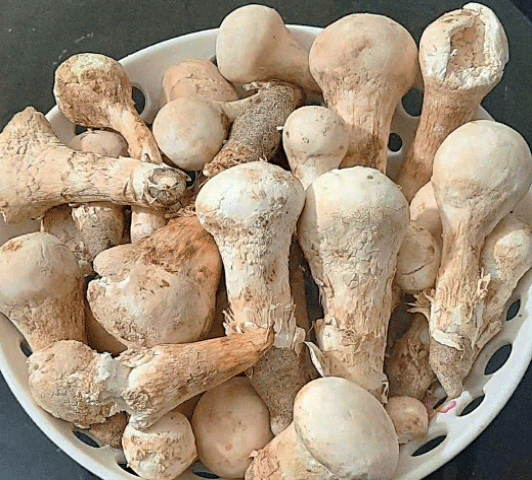
Most of you have likely tasted the tin-packed mushrooms, which are easily available from shops. But have you ever tried the ones that are nothing short of a miracle, the mushrooms that appear only after the blessing of rain?
People living in urban areas hardly experience the thrill of seeing a mushroom push its way out from the soft, damp soil after a rain. In contrast, those living in rural regions of Sindh, Punjab, Balochistan, Khyber Pakhtunkhwa or other parts of the country where there’s less concrete and more nature, witness this small wonder almost every monsoon.
That’s because they still have the natural atmosphere intact, untouched earth, where nature is free to bloom in the rawest, most beautiful ways. These seasonal and organic mushrooms are found mostly in sandy desert soils; they are not just a sight to admire; they’re a delicacy in these areas. And believe it or not, people wait for them all year, hoping for just enough rain to bring them to life.
With their bulbous shape and ivory-white or pale beige colour, they rise from the earth, holding the same nutritional value, in fact, even more because they are completely organic and chemical-free, rich with protein, fibre and antioxidants. These mushrooms are locally known as khumbi or khumb, and are considered a precious, much-awaited monsoon gift.
What makes these white bulbs
bloom after rain?
Mushrooms are part of the fungi family. The ones that grow after rain have a different lifecycle. Most of the time, they stay hidden under the ground as thin, thread-like roots called mycelium. These threads quietly wait for the right conditions, and that usually means rain.
Once the soil gets cool and wet after the rainfall, the mycelium becomes active. It then pushes up mushrooms or khumbi, a visible bulb-like part we see above the ground. These mushrooms help spread microorganisms so they can grow again. Interestingly, they can grow in just one night, almost like magic.
If you happen to travel to the outskirts or suburbs of your city during the monsoon, you might spot locals selling fresh wild mushrooms by the roadside, often at very affordable prices.
Little red wanderers
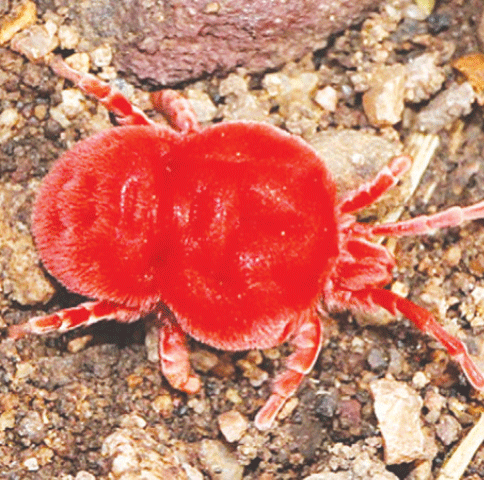
Have you ever noticed the little red dots on soft, damp ground after the rain? Perhaps you never paid attention. Or perhaps, you were not lucky enough to witness these marvels of nature, a tiny life wandering around, walking and enjoying the rain just like you.
These are commonly called rain bugs or velvet bugs and belong to a group known as velvet mites (Trombidium species). They’re tiny, the largest among them barely grows up to a centimetre, while the babies are no bigger than a single red or yellow grain of lentil.
Are they only found after rain?
Yes. Mostly. And there’s a beautiful natural reason behind it. Just like mushrooms, these bugs wait underground or stay hidden inside the moist crevices during hot, dry seasons. These bugs can’t handle the heat or the dryness of a regular day, as their velvety skin is too delicate. The entire lifecycle of these bugs depends on the seasonal rains. Even their eggs stay dormant in the soil until the next year’s monsoon, waiting for the earth to become cool, soft and moist. And when this happens, it invites the eggs to hatch, the bugs crawl out, live,feed and then return to the earth. Some only live a few days above ground.
So yes, these tiny wanderers don’t just come because of the rain, they come with the rain. Just like every creature on earth has a purpose, these velvety bugs are part of nature’s clean-up crew. Velvet mites and similar rain bugs feed on small pests, insect eggs and decaying matter.
Interestingly, these bugs are very shy or quite scared of touch. If you pick one up in your hand, you’ll notice the moment they feel touched, they hide their legs and curl into a soft velvet ball, just like a turtle hiding its head and limbs upon sensing danger.
So the next time it rains, if you have a garden or you happen to visit the countryside, watch the groundmore closely. Look into the soil’s crevices, you might just spot one, two or maybe dozens of beautiful velvet bugs — minding their own little world.
Published in Dawn, Young World, July 12th, 2025