AT a time when hardliners in India are beating the drums of war, internal unity is essential to face the challenges confronting Pakistan.
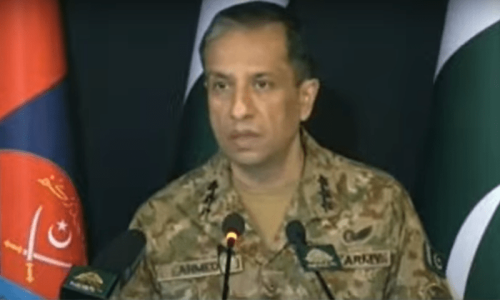
In this respect, the administration did well to invite all mainstream parties to an in-camera briefing on Sunday, to apprise them of the threat perception. The meeting, which was addressed by the ISPR chief and the information minister, was attended by representatives of all major parties, except the PTI.
According to a PTI spokesman, the party skipped the “one-sided briefing”, and instead, called for a multiparty conference to discuss the crisis. However, he added that his party stood “shoulder to shoulder” with the military in case of any foreign aggression. It is unfortunate that the PTI stayed away from the conclave. While internal differences between parties and the state may persist, at a time of national crisis these should be put aside, with full focus on how the country can confront external threats. The state, on its part, should continue efforts to include the PTI in consultations to evolve a national response based on collective input.
On the external front, the state is continuing its diplomatic outreach to counter India’s warmongering, and communicate Pakistan’s views to friends and partners. As the UN Security Council prepared to meet on Monday to discuss the crisis in South Asia at Pakistan’s call, the UN chief pleaded for “maximum restraint” by both sides. UN involvement can play a major role in de-escalation.
Elsewhere, Pakistan’s prime minister and foreign minister continue to engage with foreign friends, with the result that Russia has offered its good offices to mediate “if there is mutual interest” from India and Pakistan, while the GCC has also stressed the need for dialogue and de-escalation. If India is interested in a peaceful resolution to this crisis, it should consider these rational calls.
Beyond noise and chest-thumping, India has been unable to produce any credible evidence linking Pakistan to the terrible killings in Pahalgam. It is evident that this country was blamed even before the preliminary investigations could get under way, and the tragedy was used by India to further scuttle ties and achieve long-cherished goals, such as tinkering with the Indus Waters Treaty.
Now, as it has failed to rouse the world against Pakistan, New Delhi must act responsibly and dial down the rhetoric, while working towards restoring calm in the subcontinent. Chiefly, Indian officials should stop making inflammatory statements against Pakistan, while hardliners in this country should also be countered with more rational voices. While not much can be expected from jingoistic anchors, particularly in India, respectable media outlets on both sides need to avoid alarmist coverage and report in a responsible manner.
Published in Dawn, May 6th, 2025