Pakistan tests enhanced version of Abdali missile


 0
0
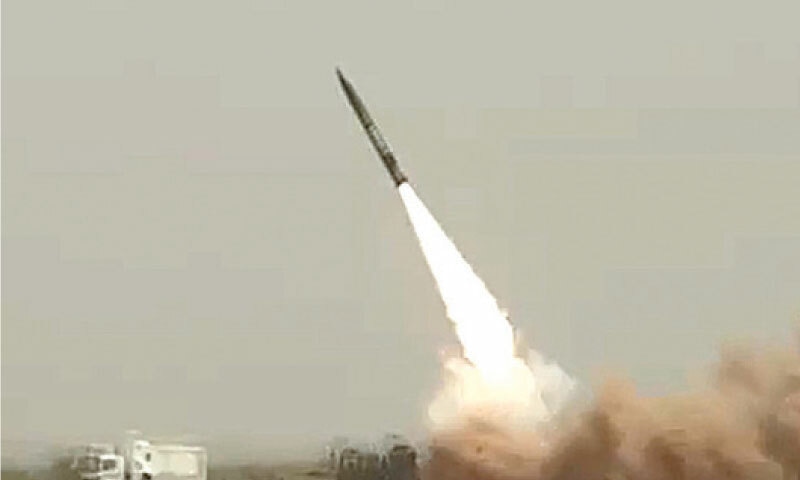
ISLAMABAD: Pakistan on Saturday tested an improved version of nuclear-capable Abdali missile, significantly increasing its range, amid escalating tensions with India, a move that is being seen as a continuation of nuclear signalling.
“Pakistan today conducted a successful training launch of the Abdali Weapon System as part of Exercise INDUS,” Inter-Services Public Relations (ISPR), the military’s media wing, said.
The missile was tested amid escalating tensions between nuclear-armed neighbours, India and Pakistan, following a deadly attack in India-held Kashmir on April 22.
Without investigation, India accused ‘cross-border linkages’ of the attackers and escalated tensions with Pakistan through military and diplomatic actions. India cancelled visas of Pakistani travellers, held the Indus Water Treaty in abeyance, initiated skirmishes along the Line of Control (LoC) and hinted at potential airstrikes.
Pakistan denied involvement and issued retaliatory steps.
Nuclear-capable ballistic missile has 450km range
The standoff, marked by exchange of fire on LoC and tit-for-tat actions, has raised fears of broader conflict, prompting international calls for restraint and renewed dialogue.
The surface-to-surface missile’s test, ISPR said, was carried out to “ensure the operational readiness of troops” and validate key technical systems, including its advanced navigation and enhanced manoeuvrability.
The newly tested version of Abdali features a range of 450 kilometres (about 280 miles) and enhanced manoeuvrability features.
The missile was originally flight-tested along with other missiles during the height of 2001-02 military stand-off with India and was subsequently inducted into the Army Strategic Force Command. The original version had a range between 180km and 200km.
The missile equipped with inertial guidance system is designed to target military bases, airfields and critical infrastructure. Although the missile carries a relatively small warhead, its mobility and solid-fuel propulsion enable rapid deployment from a Transporter-Erector-Launcher (TEL) vehicle.
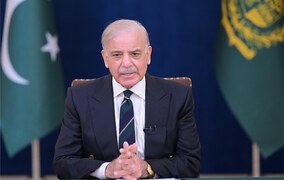
President Asif Ali Zardari, Prime Minister Shehbaz Sharif, Chairman Joint Chiefs of Staff Committee Gen Sahir Shamshad Mirza and the services chiefs extended their congratulations to the participating troops, scientists and engineers after the test.
The civil and military leadership expressed full confidence in the “Strategic Forces’ preparedness” and technical capability to uphold what Pakistan calls its “credible minimum deterrence”.
Pakistan’s messaging around its nuclear posture has become notably more assertive in recent days. Chief of Army Staff Gen Asim Munir at Exercise Hammer Strike said a “swift, resolute, and notch-up response” would be given to any Indian aggression.
Meanwhile, a statement issued after a corps commanders’ meeting on Friday further escalated the rhetoric, warning of a “sure and decisive” response across the “entire threat spectrum” and mentioning “deterrence posture”— implicitly pointing to nuclear capabilities.
“By reasserting its nuclear deterrence, Pakistan is signalling to both India and major powers that any escalatory move by India can have unintended consequences,” said Muhammad Faisal, South Asia security researcher from the University of Technology, Sydney.
“This can bog down Pakistan’s political and military leaders in a commitment trap when in response to an Indian strike, they will either escalate vertically or make their retaliation more substantive, forcing Indian decision-makers to meet with a second round of strikes,” he worried.
Published in Dawn, May 4th, 2025