The cost of travelling on Balochistan’s highways


TRAVELING on Balochistan’s main thoroughfares, especially the Quetta-Karachi highway which connects the two provincial capitals, has become a constant source of trepidation for all those who undertake the journey.
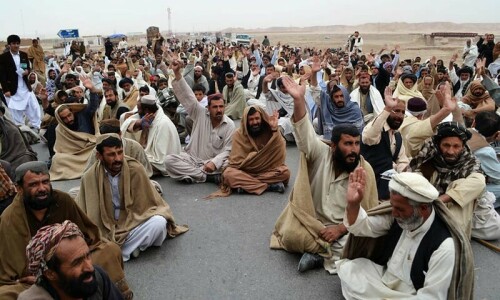
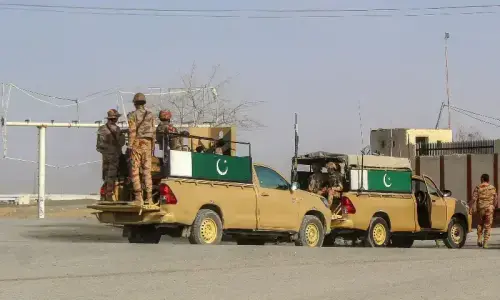
The reason for this dread is that most times, the highways are blocked, either due to protests or because certain parts have become “no go areas” due to frequent attacks by separatists. And even if there are no protests and attacks, there are many, many security check posts, which compound the miseries of commuters and travellers.
According to the Balochistan government, talks are underway to end the protests.
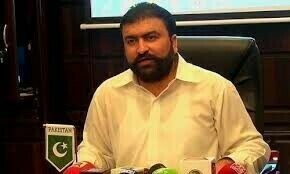
Shahid Rind, a spokesperson for the provincial government, told Dawn that Chief Minister Sarfraz Bugti’s policy was clear: the closure of roads would no longer be tolerated.
Protests, insurgent attacks and multitude of checkpoints make road journey longer, more risky
But closed they are, and taking advantage of the situation, airlines have substantially raised fares for Quetta-Karachi flights, with one-way fares rising from Rs16,000 to Rs62,000. Some travellers have even reported prices as high as Rs98,000 for last-minute bookings.
Bus owners have followed suit; increasing fares from Rs2,500 to Rs5,300.
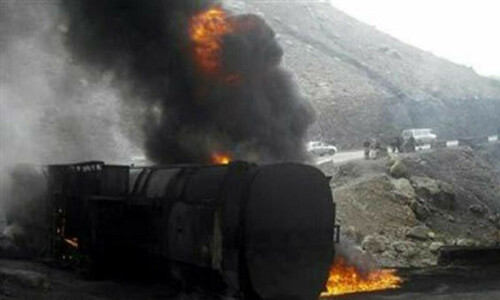
Last week came news of an attack on trucks loaded with copper and gold from Saindak, in the Mangochar area of Kalat.
Consequently, the RCD highway was blocked at Mangochar, leaving vehicles on both sides of the town stranded for hours. Passengers going to Karachi from Quetta spent those hours in fear, and there was no respite even when the journey did resume. The buses were again stopped for hours at a Coast Guards checkpoint, ostensibly to check for smuggled items in Lasbela.
Before the vehicles reached the checkpoint, however, news had spread that a bus had been looted that same night on the same road.
As dawn broke the next morning, one could see nearly 100 buses of different colours waiting at the checkpoint. The nearby tea shop was making hay; so crowded that one could hardly get a cup of tea as the number of passengers continued to swell with the arrival of more vehicles.
Angry passengers
The people undertaking these journeys all have different reasons to travel. Firstly, there were the patients going to Karachi. One of them was Mohammad Javed, who disembarked from the bus helped by two members of his family.
“He is sick, and we are taking him to Karachi for treatment,” said one of his relatives, who introduced himself as Samiullah.
He criticised the authorities for holding up the buses. “We are being treated like strangers and second-class citizens in our own country,” he complained.
Other passengers were equally charged. Some even wanted to stage a protest, but their hue and cries fell on deaf ears.
After three long hours, the journey eventually resumed, but the bus was not destined to reach Karachi. The vehicle stopped unceremoniously near Hub, and passengers were simply told to take another bus to reach the city.
“This is what happens when the government in Balochistan has other priorities, which is why they have forgotten its people and left us at the mercy of the Almighty,” one passenger could be heard complaining.
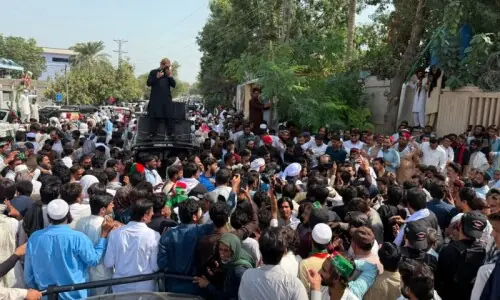
But it’s not even smooth sailing from Hub. Here, the road has been blocked by the relatives of missing persons, their protest affecting traffic on both the RCD and Makran Coastal highways. This means that commuters reach Karachi several hours behind schedule, if they are lucky enough to get there unscathed.
Published in Dawn, March 10th, 2025