Pakistan vows to combat terrorism ‘in all forms, manifestations’: FO spokesperson



Pakistan vowed to combat terrorism as it held various counter-terrorism dialogues with the United Kingdom, European Union and Japan, according to a statement by the Foreign Office on Friday.
Pakistan’s counterterrorism policy, primarily governed by the National Action Plan (NAP) and the Anti-Terrorism Act (ATA) of 1997, focuses on dismantling terrorist networks, regulating madrassas, and curbing extremist financing.
The establishment of the National Counter-Terrorism Authority (NACTA) aims to coordinate efforts across intelligence and law enforcement agencies. Military-led operations like Zarb-e-Azb and Radd-ul-Fasaad have targeted militant strongholds, while legal reforms have strengthened prosecution mechanisms. However, challenges remain in addressing extremism at the ideological level and ensuring long-term de-radicalisation, particularly amid regional security dynamics and evolving militant tactics.
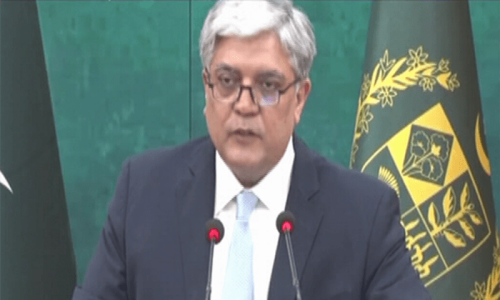
In today’s press briefing, FO spokesperson Shafqat Ali Khan said that the second round of the Pakistan-United Kingdom Counter-Terrorism Dialogue occurred on Feb 17-18.
“Both sides exchanged views on the situation in Afghanistan, global and regional landscape and on the security threats posed by terrorist entities,” he added.
On Feb 20, Pakistan and EU held their ninth Counter-Terrorism Dialogue in Brussels, according to the FO spokesperson.
He continued, “The respective delegations were led by Director General for Counter-Terrorism, Ambassador Abdul Hameed, and Director for Security and Defence Policy at the European External Action Service, Maciej Stadejek.”
FO spokesperson further highlighted the fourth round of Pakistan-Japan Counter-Terrorism Consultations in Tokyo on Feb 26.
“The Pakistan delegation was led by Additional Secretary (UN), Ambassador Nabeel Munir, while the Japanese side was led by Ambassador in charge of International Cooperation for Countering Terrorism and International Organised Crime of Japan, Minami Hiroyuki,” he said.
He added that the two sides discussed “evolving terrorist threats at national and regional level”, reiterating their resolve to “combat terrorism in all forms and manifestations”.
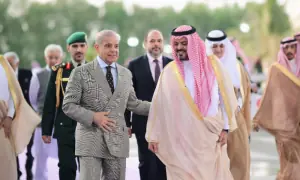
In his remarks, the FO spokesperson also highlighted Abu Dhabi Crown Prince Sheikh Khaled bin Mohamed bin Zayed Al Nahyan’s visit a day earlier.
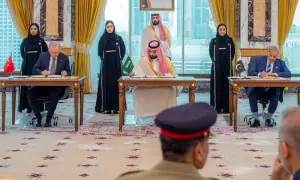
“It was his first official visit to the country. He was accompanied by a high-level delegation, including Ministers and senior officials, as well as prominent business leaders,” he said and added, “During the visit, five MoUs were signed in the fields of banking, railways, mining and infrastructural development.”