UNSC told smooth end to sanctions on Syria key to address ‘immense needs’


 0
0


UNITED NATIONS: Concrete movement on an inclusive political transition in Syria will be key in ensuring the country gets the economic support it needs, United Nations special envoy for Syria Geir Pedersen told the Security Council on Tuesday.
“There is a clear international willingness to engage. The needs are immense and could only be addressed with broad support, including a smooth end to sanctions, appropriate action on designations too, and full reconstruction,” he said.
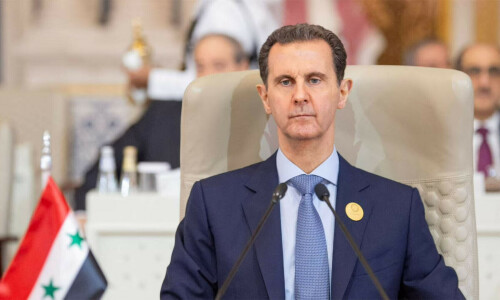
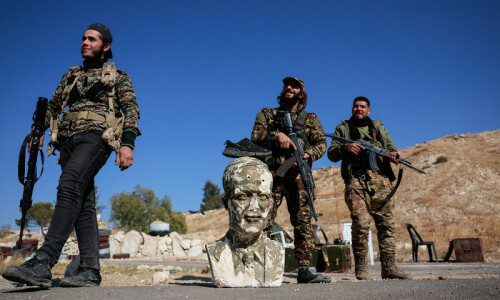
Pedersen and UN aid chief Tom Fletcher briefed the 15-member council from Damascus, where they met the country’s new leaders after President Bashar al-Assad was ousted by insurgent forces led by the Islamist Hayat Tahrir al-Sham (HTS).
The US, Britain, the European Union and others imposed tough sanctions on Syria after a crackdown by Assad on pro-democracy protests in 2011 spiraled into civil war. But the new reality in Syria has been further complicated by sanctions on Islamist group HTS for its days as an al Qaeda affiliate.
Formerly known as Nusra Front, HTS was al Qaeda’s official wing in Syria until breaking ties in 2016. Along with unilateral measures, the group has also been on the UN Security Council al Qaeda and Islamic State sanctions list for more than a decade, subjected to a global assets freeze and arms embargo.
Fletcher appealed to all states to ensure “sanctions and counter-terrorism measures do not impede humanitarian operations” in Syria.
Many diplomats acknowledge that the removal of sanctions could be used as leverage to ensure Syria’s new authorities fulfill their commitments. Diplomats and UN officials are also keen to avoid a repeat of the difficulties faced in Afghanistan. After Taliban took over in August 2021 as US-led forces withdrew after two decades of war, banks were wary of testing UN and US sanctions, leaving the UN and aid groups struggling to deliver enough cash to run operations. The US had to issue sanctions exemptions.
1m may return by June
“We have forecasted that we hope to see somewhere in the order of one million Syrians returning between January and June of next year,” Rema Jamous Imseis, the Middle East and North Africa director for the UN refugee agency UNHCR, earlier told reporters in Geneva.
She said the recent developments had brought “a tremendous amount of hope… for the largest displacement crisis we have on planet Earth to finally be resolved”. But she stressed, “We also have to recognise that a change in the regime doesn’t mean that there is an end to the humanitarian crisis already there.”
Pointing to “immense challenges”, she called on countries that have been hosting the millions of Syrian refugees to refrain from hastily sending them back. “No one should be forcibly returned to Syria and that the right of Syrians to maintain access to asylum must be preserved,” Imseis said.
Published in Dawn, December 18th, 2024