Indian police fire tear gas to halt farmers’ protest march to New Delhi



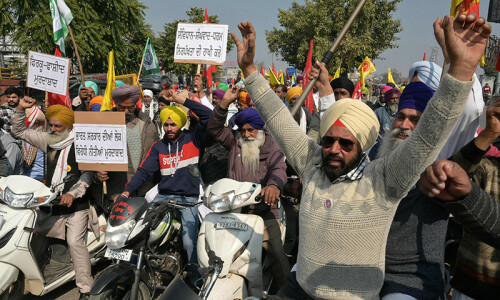
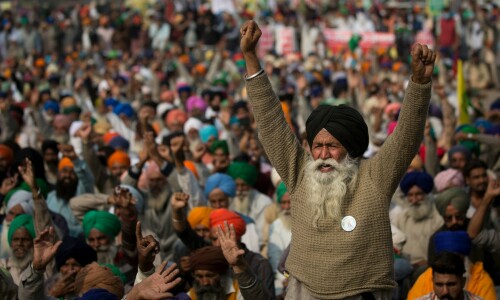
Indian police fired tear gas on Friday at protesting farmers attempting to march to the capital New Delhi to push for their longstanding demand of guaranteed minimum prices for their crops.
Farmers this week revived their dormant “March to Delhi” campaign seeking to channel the spirit of a dramatic protest in 2021, when they stormed the capital on tractors.
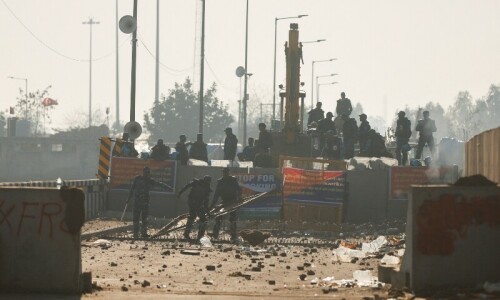
To stop the farmers at Shambhu, about 200 kilometres north of the capital, police set up heavy barricades of concrete blocks and lines of razor wire in advance of the march.
Authorities also suspended mobile internet services along the route of the procession to prevent communication among the protesters.
Waving blue and yellow flags, the farmers broke through part of the blockade before they were halted by police.

“In February, we held four rounds of talks with the government but since then there have been no further discussions on our demands,” farmer leader Sarwan Singh Pandher told reporters.
“We want the government to let us exercise our democratic right to protest.”
In addition to price guarantees for their harvest, farmers are demanding a grab-bag of other concessions, including loan waivers and increased compensation for land acquired by the government several years ago.
Farmers in India have political influence due to their sheer numbers, and the renewed protests come as the national parliament is in session.
Two-thirds of India’s 1.4 billion people draw their livelihood from agriculture, accounting for nearly a fifth of the country’s GDP, according to government figures.
Protests in November 2020 against agricultural reform bills lasted for more than a year, a major challenge to efforts by Prime Minister Narendra Modi’s government to reform the sector.
A year later, their campaign prompted Modi to repeal three contentious laws that farmers claimed would let private companies control the country’s agriculture sector.