Exhibition spotlights Kashmiris languishing in Indian jails


 0
0

MUZAFFARABAD: A photo exhibition on Saturday spotlighted the plight of nearly 4,200 Kashmiris languishing in various jails in India and occupied Jammu and Kashmir under draconian laws for years.
Organised by Pasban-i-Hurriyat Jammu and Kashmir (PHPK), an outfit comprising post-1989 refugees from occupied Jammu and Kashmir, on the premises of the Press Club, the event featured around 60 photographs of incarcerated Kashmiris and those who were martyred during detention. Each photograph displayed the detainee’s name and prison details.
Banners inscribed with demands for the release of these prisoners and calls for action by the United Nations and international human rights organisations were prominently displayed at the venue.
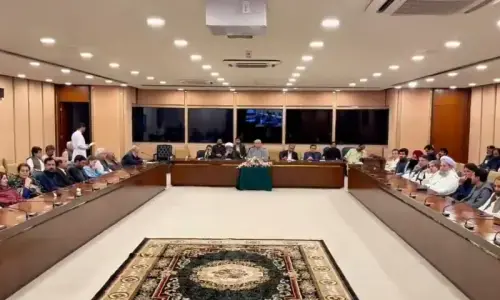
A symbolic protest sit-in, attended by people from different walks of life, including two members of the Azad Jammu and Kashmir (AJK) cabinet and a former chief justice of the AJK Supreme Court, was also held on the occasion.
Speaking at the event, PHPK chairman Uzair Ahmed Ghazali informed attendees that over 19,000 Kashmiris were arrested across occupied Jammu and Kashmirbefore and after India’s unilateral and oppressive action on August 5, 2019.
“While a large number of detainees were released after paying hefty bribes or enduring severe torture, nearly 4,200 Kashmiris, including hundreds of teenagers and six women, remain in custody,” he said.
Mr Ghazali added that around 25 detainees were serving life or long-term sentences, while the Indian government was planning to impose the death penalty on prominent Kashmiri leader Mohammad Yasin Malik.
Referring to the UN’s 1955 principles for the treatment of political prisoners, later strengthened in 2015 as the Mandela Rules, Mr Ghazali urged the global community to compel India to abide by these standards.
“We call on the UN to enforce these rules and ensure the release of Kashmiri detainees,” he said.
Another speaker, Usman Ali Hashim, shed light on the ordeals faced by prisoners and their families.
He said many detainees had been transferred to far-off prisons in India, including Tihar Jail in Delhi, Naini Jail in Allahabad, Guwahati Central Jail, Raipur Central Jail, and several others. The remaining prisoners were being held in local jails across occupied Jammu and Kashmir.
Other speakers, including Minister for Rehabilitation Javed Iqbal Budhanvi and former chief justice Chaudhry Ibrahim Zia, endorsed these views.
Published in Dawn, December 1st, 2024