0
0
PESHAWAR: Speakers at a seminar called upon young scholars to follow international standard guidelines with focus on objective conclusion as it would help them to develop a worldview and widen scope of critical thinking.
They said that doctorate theses conducted during the last decades in Pashto could not come up to international standards.
The seminar titled ‘Academic writing and research methodology’ was arranged at Khyber Union Hall under the umbrella of Islamia College University Research Fellows (ICURF). The seminar was attended by literati, research scholars and students in a large number.
Sajjad Juandoon, a young faculty member, said that the main objective of the seminar was to raise awareness among young scholars regarding quality research and academic excellence.
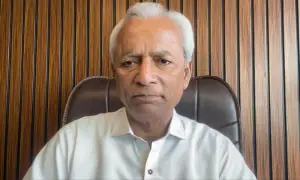
Noted Pashto writer and director of National Institute of Pakistan Studies at Quaid-i-Azam University, Islamabad, Prof Hanif Khalil, was the keynote speaker. He said that no concept of failure existed in Pashto when it came to awarding degree of doctorate or MPhil.
He said that most research theses and treatises conducted at university level lacked objective truth and scientific approach. He added that most young scholars didn’t know even prerequisites for the doctoral level thesis like research methodology, hypothesis, research question and even findings.
“Cut and paste and mere compilation trends have weakened the foundations of objective research and the spirit of true academic writing. Pashtuns are Aryans by race and Pashto language belongs to the Indo-Aryans family,” said the keynote speaker.
He said that Pashtuns had to de-construct social-constructs and go through the process of learning, de-learning and re-learning to reach out to objective truth and develop a forward-looking thought in accordance with emerging hi-tech world.
He said that Pashtuns at the most were suffering from narcissism of civilisation, nostalgia of living in the past, mostly capitalising on past marshal victories and romanticising their racial origin. They believed in personality cult and unfortunately tribalism overextended among Pashtuns, he added.
“University academia promote so-called research treatises on different aspects of a writer or Pashto literature produced in a particular region or district, research on issues and ideas were not encouraged,” he said.
Mr Khalil said that Pashto scholars had explored only one per cent of their classic literature while work on Pashtun’s socio-economic and political issues had not been even touched upon due to lack of scholastic depth and urge for research and inquiry on scientific lines.
The seminar was followed by an interesting question-answer session in which young scholars raised different questions regarding history and origin of Pashtuns and evolution of Pashto language and literature. Prof Hanif Khali answered queries by the audience in a befitting manner.
Published in Dawn, May 29th, 2024