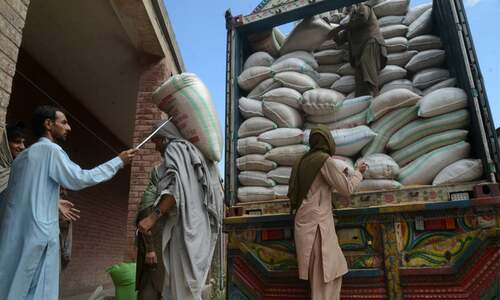
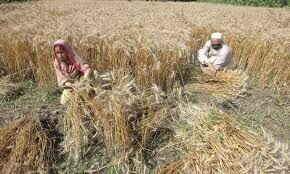
WHAT the government has done to Punjab’s smallholder wheat growers by staying out of the market amid crashing prices is deplorable. The majority of farmers were forced to sell their crop to middlemen at throwaway prices.
When some protested against the government for leaving them in the lurch, they were beaten by the police and detained. Their plight was finally voiced by some lawmakers in the National Assembly recently, with PPP chairperson Bilawal Bhutto-Zardari calling it ‘economic murder’ of the farmers. Last Thursday, lawmakers from both the treasury and the opposition raised the issue of the arrests of farmers. PPP’s Shazia Marri urged the government to accept the demands of protesting growers, while calling for excesses against them to be brought to an end. PTI’s Amir Dogar pointed out that it was for the first time in the country’s history that the government had refused to purchase wheat from farmers.
The Pakistan Kissan Ittehad, a body representing small- to medium-sized farmers from across Punjab, claims that wheat farmers had lost Rs1.1tr due to a steep drop in grain prices as they were compelled to sell their harvest at around Rs3,000 per 40kg or even less, which is far below Rs3,900 promised by the government. Indeed, the government could not have purchased the entire tradable surplus of 10m tons this year. However, its presence in the market would have kept prices from crashing.
Punjab’s farmers are going through difficult times, exacerbated by policy failure and the import of over 3.4m tons of wheat shortly before the bumper harvest on the direction of the caretaker government. The imports had facilitated traders to make quick bucks at the cost of both farmers and urban consumers who paid higher prices for low-quality imported wheat.
Prime Minister Shehbaz Sharif was quick to set up a probe committee to pin responsibility for the decision to import at a time when the country had adequate stocks from the last harvest and authorities were expecting a record wheat output on the back of a significant increase in the area under cultivation. Nonetheless, the media reports suggest, the terms of the inquiry were changed later and it was stopped from looking into the questionable role of the caretaker administration in allowing heavy imports for some inexplicable reasons. The committee’s mandate is now limited to investigating imports during March.
It remains a mystery why the premier does not want to probe the role of caretakers in wheat imports despite the negative impact of the ‘crisis’ on the position of the ruling PML-N among farmers. So far, the formation of the probe committee appears to be an attempt to sweep the issue under the carpet, unless it is allowed to hold a thorough inquiry and pin responsibility for reckless imports.
Published in Dawn, May 20th, 2024