CONFRONTED with a complex wave of terrorist violence, the state has little choice but to ‘restructure’ the National Counter Terrorism Authority, as the interior minister stated on Wednesday.
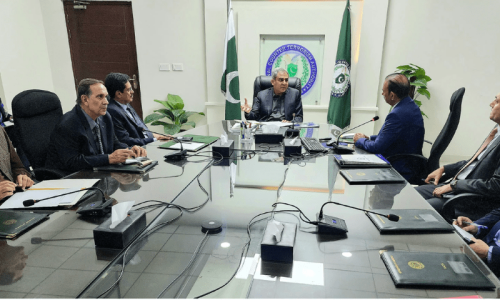
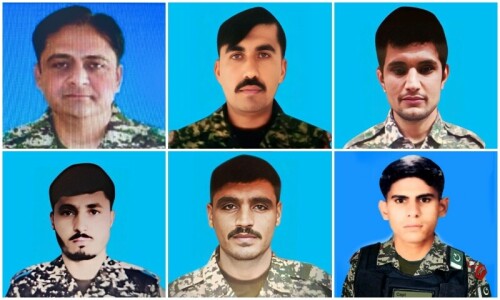
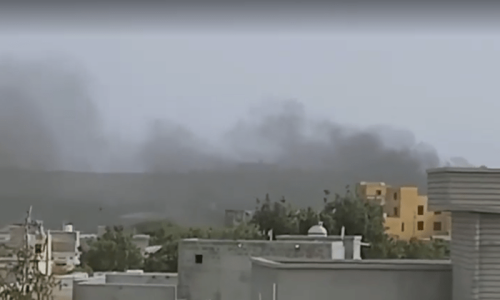
Mohsin Naqvi was attending a meeting at the Nacta headquarters on the day Baloch separatists stormed the Gwadar Port Authority Complex, while only a few days earlier, militants believed to be associated with the Hafiz Gul Bahadur group had staged a deadly attack, martyring security personnel in North Waziristan.
The current terrorist threat is varied both ideologically and geographically, and over the last few years, particularly after the Afghan Taliban’s capture of Kabul in 2021, militants have been further emboldened and have staged a large number of attacks in Pakistan.
Formed in 2009 in the midst of an earlier terrorist insurgency, Nacta — though it is supposed to be the state’s primary counterterrorism organ — has been largely sidelined by the rulers after initial successes against militancy. Though envisioned as a ‘one-window operation’ to corral national CT efforts, the agency has not been empowered with the tools necessary to deliver on its mandated goals.
Instead, the CT effort has been dominated by the military and its intelligence apparatus. While the military undoubtedly has a central role to play in rooting out terrorism, the militarised CT approach has its limits, particularly in urban areas, where civilian law-enforcement bodies, and related long-term CT strategies, are required to complement kinetic efforts.
It is also essential that while Nacta provides the operational framework, the ideological element of the CT effort is guided by the National Action Plan. NAP, formulated after the 2014 APS massacre, was updated in 2021; the interior minister also reiterated the state’s resolve to implement the plan “at any cost”.
NAP specifically mentions the reconciliation process in Balochistan, as well as reforms in KP’s merged districts, in its latest iteration. These ideas must not remain on paper, and need to be implemented with full vigour if the state is to uproot militancy permanently. In both instances — Baloch separatism as well as religiously inspired militancy in KP — poverty, deprivation and the state’s apparent disinterest in the welfare of the populations of these affected areas, have contributed to swelling the militants’ ranks.
Therefore, to address the considerable CT challenges, Nacta must be fully empowered to coordinate the state’s fight against terrorism. Moreover, civilian LEAs, particularly the provincial counterterrorism departments, should be provided with funds, equipment and training to pre-empt terrorist violence and break militant networks. Along with kinetic measures, NAP should be implemented in letter and spirit.
In particular, sectarian and extremist actors that remain active in society must be put out of business. These malignant forces provide the ideological background that produces the violent foot soldiers powering terrorist insurgencies.
Published in Dawn, March 22nd, 2024