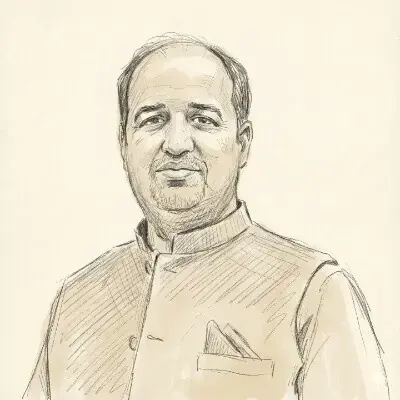
ISLAMABAD: Pointing out a shortage of water and unsatisfactory cleanliness arrangements in the twin cities of Rawalpindi and Islamabad, interim Interior Minister Dr Gohar Ejaz urged a comprehensive and effective system to provide quality facilities to residents on Thursday.
The minister said this while chairing a meeting regarding water supply and sanitation work in two cities, in which it was revealed that both cities had been facing a 47 per cent shortage of water.
The interior minister said that the capital city should be a role model for other cities; therefore, timely decisions should be made while keeping in view future needs as well.
The meeting was also attended by interim federal minister for Information, Broadcasting, and Parliamentary Affairs, Murtaza Solangi. Officials of Islamabad and the Local Government Departments of Rawalpindi attended the meeting and briefed the ministers about the said two facilities.
Minister not satisfied with cleanliness in both cities
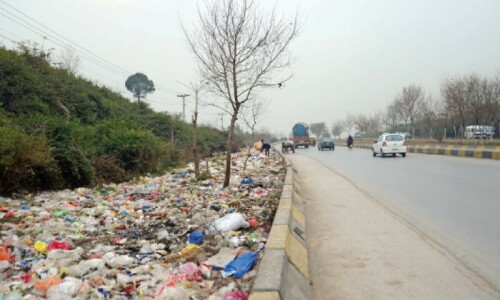
The meeting showed concerns over the growing water shortage issue in both cities. Meanwhile, during the meeting, it was told that both cities generate 2300 tons of waste on a daily basis, and for its disposal, around 8000 sanitation workers are deputed with seven billion annual budget.
The participants noticed that despite spending seven billion, the cleanliness arrangements in both cities are not up to the mark, therefore, steps should be taken to bring improvement.
The information minister said that better cleanliness arrangements and water supply system are imperative for both cities and showed his concerns over the filthy nullahs of Islamabad. Mr Solangi said the groundwater level is depleting in Islamabad; therefore, there is a need for cleanliness of the nullahs and the best sanitation system to help improve the groundwater level.
It is relevant to note here that, because of less rain, the water levels in both reservoirs — Simly Dam and Khanpur Dam — are lower than the previous year. A source in CDA said that last year on this day, 2291 feet of water was available in Simly Dam, and today, the level is 2284 feet. In the coming days, there are fewer chances of rain. This dam has a total capacity of 2315 feet. Currently, the CDA is withdrawing only 22 million gallons daily from this dam.
Meanwhile, the sources said that last year on this day, the Khanpur Dam (which supplies water to Rawalpindi and Islamabad) was 1960 feet, and today it is 1936 feet. This dam has a total capacity of 1982 feet of water, and currently, the CDA is withdrawing 7mgd from this dam.
“The situation is not satisfactory as due to less rain, the water level in both dams has been decreased,” said Director General Water Supply Sardar Khan Zimri.
He said that he had been making efforts to take whatever steps the CDA could take to improve the water supply.
Sources said that in the upcoming summer, the CDA could face a further shortage of 2mgd water as four tube wells, which had fallen in the alignment of a portion of Margalla Road from D-12 to E-11, have become dysfunctional.
Every summer, the residents of Islamabad face a water shortage.
Nonetheless, in the last three decades, no concrete measures have been taken by the CDA to explore new resources in order to meet the water requirements of the citizens.
Background talks with relevant officers showed that in the 90s the CDA launched a project to bring water from Khanpur Dam. This was the last project that was executed when Islamabad’s population was almost 600,000. However, as per the 2017 census, the population of the capital had increased to 2.2 million, but water resources are still the same.
According to CDA officials, the current requirement for water in Islamabad’s urban and rural areas is 220 MGD. CDA provides up to 60 to 70 MGD, mostly in urban areas, through four major sources: Simly Dam, Khanpur Dam, tubewells, and two MGD from Rawal Dam.
The city’s rural population depends on water bores, tubewells, and a small water supply scheme launched by the district administration. Work on various projects that have been discussed for the last 15 years, including the Ghazi Brotha project, the extension of Khanpur Dam, and the construction of Chirrah Dam, is still pending.
The Ghazi Barotha project was designed to provide 100 MGD to Rawalpindi and Islamabad. Initially, the estimated cost of the project was Rs 37 billion, which was re-estimated in 2017 at Rs 77 billion, and now the cost has climbed to Rs 120 billion.
Published in Dawn, February 16th, 2024