



 0
0

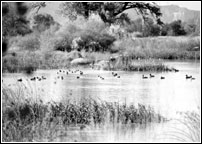 DESPITE an arid entity, the country supports over an area of about 1.3 million hectares of wetlands including about 225 significant wetland resources. Nineteen of these have been internationally recognized by the Ramsar Convention Bureau. On a global scale, about 570 million hectares, roughly six per cent of the Earth’s land surface falls under wetlands canopy, of which two per cent are lakes, 30 per cent bogs, 26 per cent fens, 20 per cent swamps, and 15 per cent flood plains.
Currently, about 124 countries are member of Ramsar Convention Bureau with 1,069 wetland sites having an area of 81.2 million hectares.
According to this convention lands encompassing these characteristics are declared as wetlands which are “areas of marsh, fen, peat land or water, whether natural or artificial, permanent or temporary, with water that is static or flowing, fresh, brackish or salt, including areas of marine water the depth of which at low tide does not exceed six meters.
About 19 wetland sites in Pakistan on about 1.3 million hectare have been recognized internationally. Among these, nine wetlands were recognized in Ramsar Convention in 1976 having a total area of (7,800 km2) while remaining 10 won their international status in 1996, 2001 and 2002.
Pakistan, which is a centre of three geographical regions South Asia in the east, West Asian plateau in the west and central Asian mountain region in north, is the only country on the globe, that enjoys wetlands of high altitude alpine (4000-5000m in northern areas) to low altitude wetlands tropical (1000m) in coastal areas.
In case of high altitude wetlands, Hindukush–Himalayan Mountains posses an unlimited number of wetlands, some of these have been explored but most of these are still unexplored.
The Hindukush–Himalayan Mountains extend 3500km and cover over an area of 3.5 million km2, while being distributed among eight countries including Pakistan. It’s about 90 peaks above 7,300m and innumerable others over 5000-6000m are interspersed with thousands of wetlands, some of which are abundant in biodiversity and home to precious species.
In Pakistan commonly known wetlands of high altitudes are (1) Peripheral, peat-lined lake adjacent to Karumbar Lake in the upper Karumbar Valley, northern areas (elevation 4,150 meters) (2) Extensive peat bog south of Lashkargahaz, Chitral (NWFP) (elevation 3,649 meters) (3) A peat-lined tributary of the Yarghoon River near Lashkargahaz, NWFP(elevation 3,649 meters)(4) The braided bed of the Yarghoon River, north of Lasht, Chitral NWFP (elevation 3,200 meters) (5) Broghil Lake on the divide between Chitral and Ghizer Districts(NWFP) and (6) Peat bog on Deosai National Park, Northern Areas (elevation 4,188 meters).
Most of the high altitudes wetlands exist in or at the feet of Himalayan Mountains in the northern areas. Pakistan enjoys a vast variety of wetlands from marine, brackish and freshwater to man-made. Many wetlands of Pakistan enjoy international status.
Wetlands are the world’s most productive ecosystem which, support high concentrations of birds, mammals, reptiles, amphibians, fish and invertebrate species.
According to an estimate, of the 20,000 species of fish in the world, about 50 per cent survive in fresh water ecosystem. Wetlands are major reservoir of plant genetic material. Mangroves or salt-tolerant plants cover over 240,000 km2 of coastal area and an estimated 600,000km2 of coral reefs worldwide.
This ecosystem supports a huge population of globe. Recently, owing to steadily increasing salinity/sodicity peoples are incorporating the salt-tolerant characteristics of mangroves to other wetlands plants like rice.
Rice is a common wetland plant and a staple diet of more than half of humanity. The economic worth of this ecosystem can be visualized from the fact that wetland ecosystems provide approximately $5 trillion worth of services annually. Wetland ecosystems often have profound cultural and spiritual value for very tier of contemporary society.
Being an integral part of world’s socio-economic agenda, it supports local economy, agriculture, industry, tourism, commerce, and presents an exceptional mean of recreation for tier soul.
Mostly the threats to wetlands ecosystem in Pakistan are water shortage, hunting and human settlement, drainage of agriculture, disturbance from recreation, reclamation for urban and industrial development, pollution, catchment degradation, diversion of water, soil erosion and siltation etc. The magnitude and intensity of problems confronting these are different under different conditions.
Wetlands system falling under arid to semi-arid environment like wetlands of Sindh province is facing water shortage for their sustenance. Agriculture sector in Pakistan is a major consumer of freshwater, which utilizes about 95 per cent of total available fresh water. The water use efficiency in this sector is again at an alarming rate of 30-40 per cent due to tremendous seepage losses in unlined canal water system.
Low discharge of water to these wetlands have not only inhibited the sediments nourishment of coastal wetlands in Sindh but also raised water level in some parts situated in the vicinities of canal water network system. If irrigation system streamlined, water availability can be enhanced to these ecosystems.
Most of the wetlands resources in coastal areas of Pakistan have not been exploited for their potential role in recreation and agriculture. The coastal wetlands of present a beautiful mosaic of biodiversity, climate and island/marine environment being embedded with multi-coloured plant and animal species which can be a potential source of income from visitor.
In near future, with changing global socio-economic climate, the coastal wetlands of Balochistan possess a huge potential for recreation purposes. Astola Island (locally known Haft Talar means seven rocks) wetland of Balochistan which is situated in the northern Arabian Sea, approximately 25km off the mainland coast, 40km east-southeast of Pasni Harbour and falls under the Pasni subdivision of Gwadar district.
This uninhabited area encompasses a significant potential for recreational purposes due to presence of unique plant and animal species. Similarly, Jiwani Coastal Wetland is also best suited for above-mentioned purposes.
A majority of the coastal wetlands of Pakistan has very attractive landscapes. In present scenarios of recent and dynamic development in Gwadar coast their utilization for human activities may generate tremendous employment opportunities for local inhabitants due the vast scope of plant and animal species for their utilization in industry for pharmaceuticals and landscaping purposes.
Little work has been done in order to grasp their potential at different angles in socio-economic terms.
Policy measure for optimum utilization of wetlands resources are mainly based on mainly five principles set by Ramseur Convention Bureau like (1) incentives for local and indigenous people’s involvement and wise use (2) trust among stakeholders (3) flexibility (4) knowledge exchange and capacity building, and (5) continuity of resources and effort.
In harnessing wetlands resources following policy routes would be highly conducive.
*There should be a detailed survey of country’s wetlands with respect to utilization for agriculture, recreation, agro-forestry, fisheries and other miscellaneous purposes.
*Legitimate efforts are needed to make aware locals about their value and conservation via effective campaigns.
* There is a dire need to mobilize public and private sectors to invest in various development projects for their optimum utilization.
* There should be an active engagement, sound coordination; understanding and mutual knowledge sharing among different research institutes and organizations involved in conservation and utilization of wetlands.
* Design indicators to measure local and indigenous people’s involvement in wetland management and emphasis should be on protection of their basic rights in order to run this job on sustainable without any obstacle generated by local people.
* Community-based resource management strategies based on empowerment, equity, and gender-fair without any discrimination should be encouraged.
* Developmental projects on wetlands like Astola Island and Miani lying close to Gwadar coast should initiated urgently to enhance their value as visiting places to attract the foreigners and locals.
* All the developmental projects should conserve biological diversity and maintain ecological balance.





























