20
20

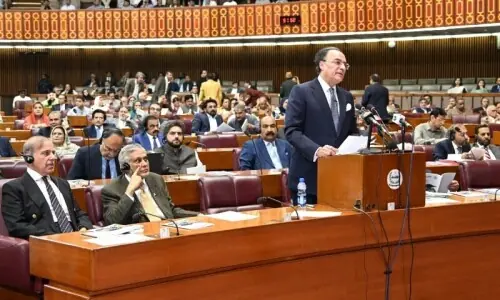
Finance Minister Miftah Ismail on Wednesday told the International Monetary Fund (IMF) that the government understood the current economic crisis and agreed that it would have to take "tough decisions" while mitigating the effects of inflation on middle to low-income groups.
Earlier today, the government began talks with the Fund over the release of a $1 billion tranche under an Extended Fund Facility, a process slowed by concerns about the pace of economic reforms in the country. The talks are being held in the Qatari capital Doha, the Ministry of Finance said, and are expected to continue into next week.
However, the finance minister, Minister of State Dr Aisha Ghous Pasha, Finance Secretary Hamed Yaqoob Shaikh, State Bank of Pakistan (SBP) Acting Governor Dr Murtaza Syed, Federal Board of Revenue (FBR) Chairman Asim Ahmad and other officials from the Finance Division participated in the talks virtually.
According to a handout issued later in the day by the Finance Division, Ismail reaffirmed the government's commitment to undertake reforms envisaged under the programme and to complete the structural benchmarks.
"IMF mission chief, Nathan Porter, shared with the minister for finance and revenue IMF’s assessment of the challenges facing the economy. He sensitised that Pakistan’s economy demanded both immediate and long-term measures," the handout said.
According to the statement, Ismail stated that some of the factors that had adversely affected the economic situation "were beyond the control of the government".
"These included exogenous factors like supply shocks, commodity super cycle and [the] Russia-Ukraine conflict due to which commodity prices further soared. These factors were putting pressure on [the] current account as well as foreign exchange reserves," it added.
Ismail further said that the government would take measures to reduce the burden on the economy while protecting the vulnerable sections of the population. He added that Pakistan should aim to address structural issues so that the country is able to end its fiscal deficit and move towards sustainable growth.
The finance minister thanked Porter for the Fund's support at a difficult time for the global economy and both sides showed a keen interest to complete the review successfully, the statement said.
The Finance Division also said that Ismail and Pasha would be joining the team in Doha early next week to conclude the discussion with the "expectation to clinch an agreement for IMF’s continued support" until the successful completion of the programme.
A $6 billion IMF bailout package signed by former prime minister Imran Khan in 2019 has never been fully implemented because his government reneged on agreements to cut or end some subsidies and to improve revenue and tax collection.
Islamabad has so far received $3bn, with the programme due to end later this year. Officials are seeking an extension to the programme through to June 2023, as well as the release of the next tranche of $1bn.
Prime Minister Shehbaz Sharif has vowed to jumpstart the moribund economy, but analysts say his fragile government has failed to take tough decisions.
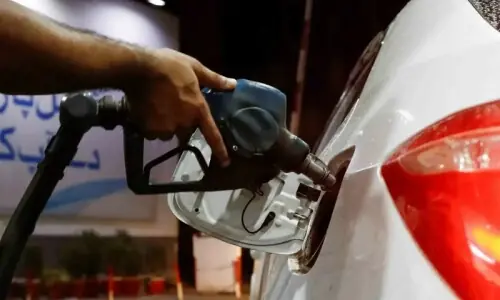
In recent meetings with the new finance minister, the IMF has linked the continuation of its loan programme with the reversal of fuel subsidies, which were introduced by the previous government. However, Prime Minister Shehbaz has multiple times rejected summaries by the Oil and Gas Regulatory Authority and the finance ministry to increase fuel prices.
“It's an administration that has refused to take hard political steps to bring eventual economic relief — but that's exactly the sacrifice it must make by going to the IMF,” said Michael Kugelman, deputy South Asia director at the Wilson Centre in Washington.