1
1
HERAT: In the middle of a bazaar in western Afghanistan, Arezo Akrimi takes out her smartphone and, after a few taps of the screen, changes some cryptocurrency for a bundle of hard cash.
Arezo, 19, is one of a hundred students in Herat receiving around $200 a month in cryptocurrency since September thanks to an American NGO Code To Inspire.
This sum, which she converts at a bureau de change into Afghanis, is crucial for the rent and to help feed her family of six.
Since the Taliban returned in August, Afghanistan’s economy has virtually collapsed and the country is in the grip of a crisis caused by the seizure of billions of dollars of assets held abroad.
But digital currencies and their decentralised architecture, impervious to international sanctions, are allowing a handful of young Afghans to avoid the worst of the crisis.
“It was very surprising for me to learn that this could be used in Afghanistan,” Arezo told AFP. “It was really helpful.”
Code To Inspire was founded to teach computer programming to women in Herat, but its hi-tech approach is now also helping students get funds in the economically deprived nation.
Bank transfers to Afghanistan are almost impossible currently, to prevent funds from falling into the hands of fundamentalists.
But even those with money in a bank struggle to get it out — individuals are limited to withdrawing the equivalent of $200 a week, and businesses $2,000.
Customers have to queue for hours even for those transactions.
Cryptocurrency transfers have allowed the NGO to circumvent these obstacles while ensuring that each donation gets to those who need it most, founder Fereshteh Forough told AFP.
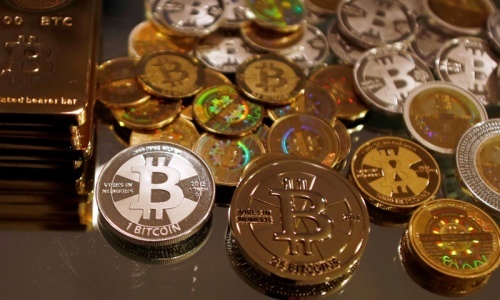
“Crypto is an incredible way to overcome all kinds of political and economic sanctions, but also a tool that can change the lives of people living in an authoritarian regime,” says the American, whose parents fled Afghanistan in the 1980s. To guarantee the financial security of its students, the NGO avoids paying them in bitcoins, the best-known cryptocurrency but whose price regularly swings wildly.
Instead, it favours the BUSD, a so-called “stablecoin” whose price is backed by the dollar. “One BUSD is one dollar,” says Forough.
Crypto coverts
Beyond this humanitarian initiative, cryptocurrencies are gaining other followers in Herat, according to forex dealer Hamidullah Temori.
He has seen an influx of new customers over the past six months, many of whom regularly come to convert cryptoassets sent by relatives from abroad into Afghanis.
“Since the Taliban came to power (cryptocurrency) transfers to and from abroad have increased by 80 per cent,” he told AFP.
Transfers are instantaneous and commissions are much lower than transactions made through Western Union or hawala, the over-the-counter system traditionally favoured by Afghans.
In Kabul, Noor Ahmad Haidar has become a crypto convert by force of circumstance.
The young man, who started exporting saffron to the United States, Britain, Australia and Canada in early 2021, now has 90 per cent of his orders paid for in bitcoins.
Published in Dawn, March 21st, 2022