US businesses face uncertainty as White House bans China’s WeChat


 2
2


HONG KONG: As Tencent assesses how its business might be impacted by a US decision to ban its messenger app WeChat in the country, American companies in China may become unintended casualties due to their heavy reliance on the app, experts said.
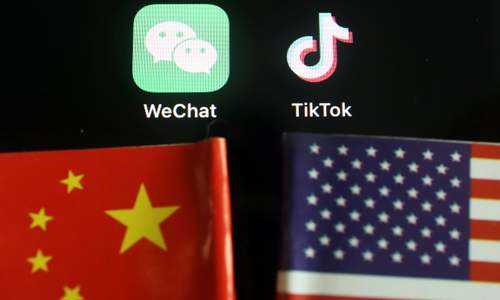
US President Donald Trump on Thursday unveiled sweeping bans on US transactions with owners of WeChat and video-sharing app TikTok, which his administration has called “significant threats”.
It’s not clear to what extent the executive orders, which go into effect in 45 days, would impact WeChat’s business and whether Tencent’s large fleet of investments in the US and other parts of the world would come as collateral.
But if the ban covers US companies doing businesses on WeChat, it would do more harm to US firms such as Walmart and Starbucks than to Tencent, said Chengdong Li, a Beijing-based tech analyst.
WeChat is an all-in-one mobile app that combines services similar to Facebook, WhatsApp, Instagram and Venmo. The so-called super app is almost essential for daily life in China and boasts more than 1 billion users.
American brands, big and small, from Nike to KFC, Starbucks and Amazon use WeChat’s embedded ‘mini-app’ programmes to facilitate transactions and engage consumers in China.
Users of the mini-app programmes do not need to download such retail apps separately as they can access those apps stored in WeChat’s cloud.
“The revenue Tencent got from these mini-apps for Walmart and Starbucks is minuscule in comparison to Tencents video games revenue domestically,” Li said.
“The ban would hurt Walmart and Starbucks more significantly as they rely on Tencent to get traffic.”
While Walmart’s “Scan-and-Go” payment service is offered via its own app in the United States, the retail giant embedded the service into WeChat in China.
Walmart said last year the service, which enables customers to pay with their smartphones by scanning the bar code on items and skip queuing up at the cash register, made more than 30 per cent of its transaction in China.
It aligned itself with Tencent so much that in 2018 it dropped Alibaba-linked Alipay in all its stores in the western region of China.
While it’s unclear whether and how much US companies will be impacted, Raymond Wang, managing partner at Beijing law firm Anli Partners, said American businesses on WeChat might be able to survive the ban “as long as their entities linked to WeChat are registered outside US” If the ban only covers WeChat businesses in the United States, it would inflict limited impact on both Tencent and US companies relying on the app in China, as it is not heavily used by non-Chinese individuals in the United States.
“While we are not in a position to judge the future evolvement of this issue, we believe the current EO (executive order) seems to be targeting only WeChat, and if we are correct, the impact to Tencent’s financials would be limited,” Citi analysts wrote in a note Friday.
Published in Dawn, August 8th, 2020