0
0
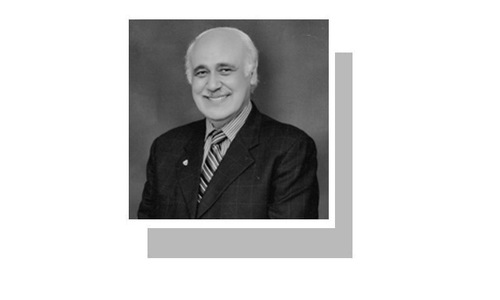
PESHAWAR: Peshawar Museum’s Victoria Memorial Hall, for the third year running, played host to the indomitable Dr Sayed Amjad Hussain who delivered a captivating talk entitled, “The Great Mosque of Cordoba and its place in the Muslim psyche” on Friday evening.
Speaking before an audience comprising literati and history buffs, the scholar narrated that very few architectural monuments in the world had a deep and abiding emotional pull.
“After the passage of a thousand years the Great Mosque of Cordoba (Qurtaba in Arabic) still has a tremendous pull on the Muslims the world over. It is a story of loss and lament,” he said.
According to him, the Moors ruled the Iberian Peninsula (Spain and Portugal) for eight centuries until 1492 CE. They established a truly pluralistic society where Jews, Muslims and Christians participated equally and ushered in an era of unprecedented advances in science, arts and architecture. Those accomplishments still dazzle after the passage of over 1,300 years.
The Great Mosque of Cordoba, Spain, was built in 784 CE by Abd Rahman-I and expanded by his successors. In 1492 CE after the re-conquest of Iberian Peninsula, the mosque was turned into a cathedral. From that point on, while the original architecture of the mosque has been maintained, it has ceased to be a place of worship for Muslims. Sadly, nobody is allowed to pray there anymore.
The loss of Andulas in general and the Qurtaba Mosque in particular was highlighted in Allama Iqbal’s epic poem Masjid Qurtaba.
The audiovisual presentation discussed the history of the Moor rule in Spain and Portugal, the highlights of pluralistic society and their eventual defeat and expulsion from Spain and Portugal.
Iqbal’s epic poem, which was specially played in audio in the voice of Zia Mohiyuddin, captivated the gathering.
Through the magic of his spellbinding talk and with Andalusian Moorish-Spanish music playing softly in background, Dr Hussain recreated the historic environs of Spain under Muslim rule. “It was a unique pluralistic society where Muslims, Christians, Jews and other faiths accommodated each other under the Muslim rulers. They lived in complete harmony and tolerated each other. This ushered in an era of progress that was a glorious period of Islamic rule,” he said.
With the help of visual aids, he showed how the mosque was expanded over the years. The horseshoe shaped arches were the architectural hallmark of its fine construction, according to him.
The talk was followed by an equally engaging question and answer session where a select audience comprising literati and prominent citizens of Peshawar delved deeper to discuss the notion of tolerance and interfaith harmony in present day Pakistani society. The scholar gave examples from his own experiences and referred to Manto’s short story “Toba Tek Singh”.
Often described as a ‘jack of all trades and master of many’, Dr Hussain has monumental contributions in the fields of medicine and literature. He has authored many books on history and culture. An accomplished cartographer and calligrapher, he also engages in community work and promotes interfaith dialogue. Born and raised in Peshawar, he is currently based in the US.
On this occasion, he also gifted copies of his famous souvenir maps of Greater Peshawar Area and Peshawar Walled City. According to him since they were first published in 1980s, the maps have undergone eight printings. Dr Hussain recently got them printed in the form of leaflets for free distribution.
The event was co-organised by Directorate of Archaeology and Museums, Creative Co and RotarAct South Peshawar.
Published in Dawn, December 15th, 2019