PM commends 58 countries, EU over Kashmir cause



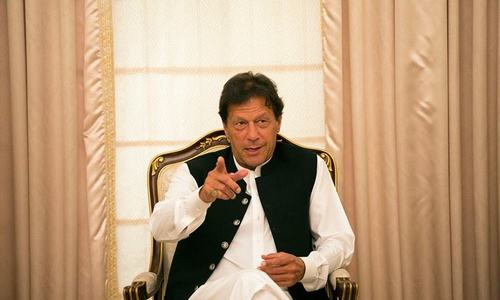
ISLAMABAD: Prime Minister Imran Khan on Thursday commended 58 countries and the European Union for supporting the cause of a peaceful resolution of the Kashmir dispute in the line with UN Security Council resolutions and international laws.
The prime minister said in his tweet: “I commend the 58 countries that joined Pakistan in Human Rights Council on 10 Sept reinforcing demands of international community for India to stop use of force, lift siege, remove other restrictions, respect and protect Kashmiris’ right and resolve Kashmir dispute through UNSC resolutions.
‘‘I welcome the EU’s call in the Human Rights Council for a peaceful solution of the Kashmir dispute in line with UNSC resolutions, international laws and bilateral agreements.”
Pakistan on Monday welcomed a new report of the United Nations on the situation in occupied Kashmir, which for the second consecutive year called for setting up of a commission of inquiry for investigating human rights abuses being perpetrated by Indian occupation troops in the valley.
Criticises US for blaming Pakistan for its own setbacks in Afghanistan
However, the Foreign Office cautioned the UN Office of the High Commissioner for Human Rights (OHCHR) against comparing the situation in occupied Kashmir with Azad Kashmir and Gilgit-Baltistan.
Earlier, Prime Minister Imran Khan had called upon the United Nations Human Rights Council to immediately set up an independent investigation commission to probe human rights abuses in occupied Kashmir as recommended in the two OHCHR reports on the disputed territory.
He welcomed the growing concern and demands by the international community, global leaders and UN officials for India to lift its six-week-long siege of the occupied Himalayan territory.
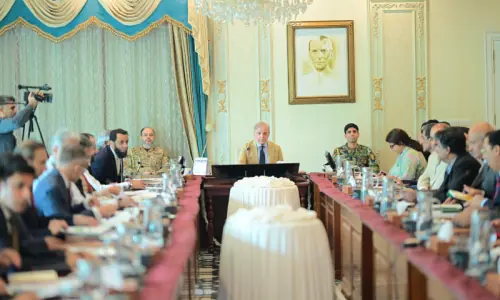
Later, presiding over a meeting on ‘ease of doing business’ in the construction sector, the prime minister declared, in principle, the construction sector as an industry.
Special Assistant to the PM on Information and Broadcasting Dr Firdous Ashiq Awan, Board of Investment Chairman Syed Zubair Gillani, Housing Secretary Dr Imran Zeb, Naya Pakistan Housing Authority Chairman retired Lt Gen Anwar Ali Hyder and senior officials attended the meeting.
Lt Gen Hyder briefed the prime minister on the steps being taken to address policy issues, simplification of procedures, easy access to comprehensive information, abolition of unnecessary approvals, compliance with zoning and development bylaws, use of technology elimination/minimising the need for physical presence and personal interaction and doing away with discretionary powers, particularly during inspections, concurrent activities within stipulated timelines.
He presented short-, medium- and long-term roadmap for improving ‘ease of doing business’ in the construction sector.
Meanwhile, in an exclusive interview with RT News, the prime minister said that despite becoming the worst victim of the Afghan war and war on terror, Pakistan had been blamed by the United States for its own setbacks in Afghanistan.
He said Islamabad suffered great losses when it joined Washington’s war on terror, and in the end the US still pinned the blame on Pakistan for its own setbacks in Afghanistan.
Mr Khan was quoted as saying: “Pakistan took a serious hit after joining the US-led global campaign against terrorism.”
Before that, Islamabad was backing Islamist fighters, who were reportedly “funded by the American CIA” to wage war against the Soviet Union in Afghanistan in the 1980s. But as it was the US turn to invade Afghanistan, “these groups turned against us”, he added.
“We lost 70,000 people. We lost over $100 billion [from] the economy. And in the end, we were blamed for the Americans not succeeding in Afghanistan. I felt it was very unfair to Pakistan,” he said.
Published in Dawn, September 13th, 2019