US extends nuclear waivers for Iran



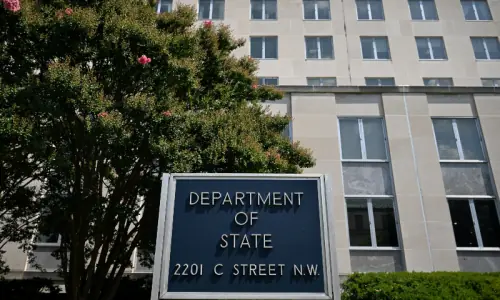
WASHINGTON: US Secretary of State Michael Pompeo announced on Saturday that the Trump administration is extending waivers that allow certain countries to participate in civilian nuclear projects with Iran.
“We are permitting the temporary continuation of certain ongoing non-proliferation projects that constrain Iran’s nuclear activities and that help maintain the nuclear status quo in Iran until we reach a comprehensive deal that resolves Iran’s proliferation threats,” a US State Department fact sheet said.
The department announced that the waivers would allow certain parties to the 2015 deal to conduct research and do non-proliferation work at three sites in Iran without fear of sanctions — Arak, Fordow and Bushehr.
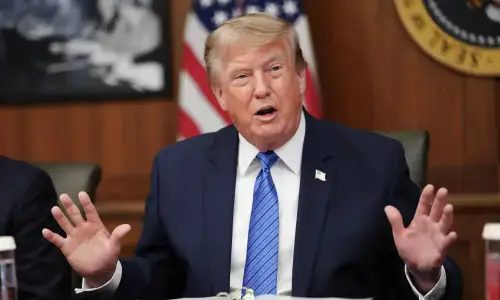
In 2015, Iran signed a long-term nuclear deal with the P5+1 group of world powers — the US, the UK, France, China, Russia and Germany. In May 2018, US President Donald Trump walked away from the deal concluded by his predecessor Barack Obama.
The US decision, however, did not affect the arrangement that allows China, France, Russia, Germany, Britain and the EU to work with Iran on its nuclear sites.
The work includes modifications to ensure that the Arak reactor produces less plutonium, the Fordow nuclear site is converted into a research facility, and Iran continues to receive fuel for the Bushehr nuclear energy facility.
On May 2, President Trump ended the waivers that allowed countries like China and India to import Iranian oil, stirring an intense debate within the administration on whether nuclear waivers should also be revoked.
The US media reported that US National Security Adviser John Bolton was pushing for an end to the waivers, while Secretary Pompeo wanted the waivers to continue.
On Monday, the US-based Arms Control Association warned the Trump administration that “failure to grant the waivers would jeopardise US non-proliferation priorities and increase the risk that the [Iran] nuclear deal will collapse”.
Other US non-proliferation experts reminded the Trump administration that the provisions for civil nuclear cooperation in the deal were meant to reduce the proliferation risks of Tehran’s nuclear programme.
Ending the waivers would have also forced the US to impose sanctions on some of its close allies and partners.
Published in Dawn, May 5th, 2019