33
33

WASHINGTON: Hours before members of religious organisations spread across country to protest a Supreme Court decision to free Aasia Bibi, the United States urged Pakistan to immediately enact legislation that formally proscribes radical religious groups.
The US suggestion followed a decision announced last week for ending a ban on two radical religious organisations, Jamaatud Dawa (JuD) and Falah-i-Insaniyat Foundation (FIF).
The United States has designated both as terrorist groups.
The Pakistani media reported that the two outfits temporarily came off the list of banned outfits in Pakistan because the ordinance that proscribed them under a UN resolution had lapsed.
The new Pakistani government is working on a proposal to extend the ban.
Islamabad working on proposal to extend ban on Jamaatud Dawa, Falah-i-Insaniyat Foundation
The development underscores the importance of Pakistan “urgently enacting legislation that formally proscribes” both JuD and FIF, a spokesperson for the US State Department told reporters in Washington.
“The expiration of the ban on JuD and FIF runs counter to Pakistan’s commitment to work with the Financial Action Task Force (FATF) to address weaknesses in its counter-terrorism financing regime,” said the US official.
“As we have said before, the United States is deeply concerned that this development will jeopardise Pakistan’s ability to meet its commitments under UN Security Council Resolution 1267 to freeze and prevent the raising and moving of funds belonging to or associated with UN-designated terrorist groups,” the spokesperson said.
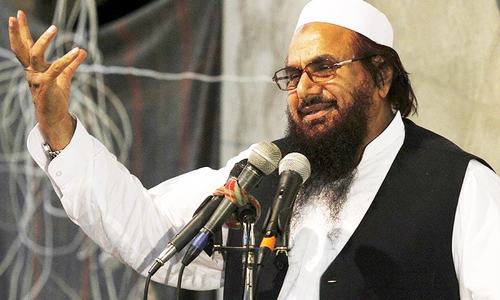
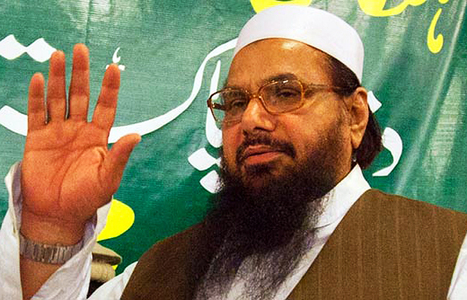
In February 2018, former president Mamnoon Hussain signed an amendment to the antiterrorism law that allowed the state to ban charities linked to Hafiz Saeed, like Jamaatud Dawa and Falah-i-Insaniyat Foundation.
The Constitution, however, requires a presidential amendment to be ratified or renewed by the parliament within four months of its issuance.
Recently, Hafiz Saeed filed a petition, arguing that the amendment to Pakistan’s antiterrorism law had become unconstitutional as the parliament failed to ratify it.
Hafiz Saeed initially headed Lashkar-e-Taiba (LeT), formed in the 1980s, which was designated a terrorist outfit by the US, the United Nations, Britain, Russia and the European Union. In 2012, the United States announced a $10 million bounty for Hafiz Saeed’s arrest. Pakistan has also banned the group.
But US officials say that Hafiz Saeed has evaded the ban on LeT by creating multiple other organisations, including JuD and FIF, that work as LeT’s fronts.
Jamaatud Dawa and Falah-i-Insaniyat Foundation manage a large charity network with the help of thousands of volunteers.
Published in Dawn, November 1st, 2018