0
0

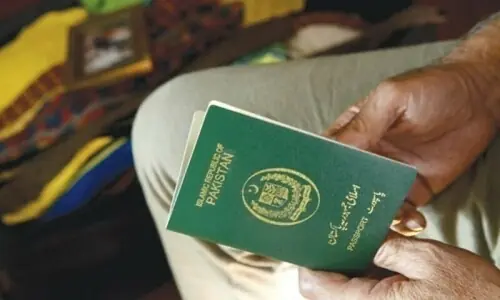
ISLAMABAD: Pakistan is among the five most prolific executioners in the world with 487 executions in the last three years, while the president has rejected 513 mercy petitions in the last five years, a report launched on Wednesday has found.
The report, No Mercy: A Report on Clemency for Death Row Prisoners in Pakistan, was launched by Justice Project Pakistan.
It said that the government has executed nearly 500 people since lifting the moratorium on the death penalty in 2014.
And although the president possesses the constitutional authority under Article 45 to pardon death row defendants, in practice in such petitions have been consistently denied since December 2014, operating under a blanket policy for cases with strong evidence of humanitarian abuse and violations.
The report quoted the Ministry of Interior as stating that the president’s office had rejected 513 mercy petitions by condemned prisoners – 444 of which were from the first 15 months after the resumption of executions in December 2014.
The interior ministry has also informally confirmed that the government has a de facto policy to summarily reject all mercy pleas.
The report includes case studies of death row prisoner Abdul Basit, Imdad Ali, juvenile offender Mohammad Iqbal and Zulfiqar Ali, a Pakistani citizen on death row in Indonesia. The cases illustrate the systemic problems of Pakistan’s criminal justice system.
The report argues that given the procedure failings, individuals on death row should be given a fair chance to obtain clemency and introduce new and potentially exculpatory evidence.
Speaking at the launch of the report, Nusrat Bibi, the mother of the paralysed death row prisoner Abdul Basit whose mercy petition is pending, broke into tears and asked the president: “How can you hang a man who cannot even stand?”
She said her son was sentenced to death in 2009, and contracted tubercular meningitis at the Faisalabad Central Jail due to its unhygienic conditions.
“Due to the failure of jail authorities to provide him treatment, his condition deteriorated and after remaining unconscious for one week, he wasshifted to DHQ hospital. Despite spending 13 months there, he became paralyzed from the waist down,” she said.
A mercy petition filed for Basit in 2013 was rejected in 2015 without any written reason for the rejection.
Relatives of other death row prisoners were also present at the launch, and appealed to high-ups to examine mercy petitions in humanitarian grounds.
Commissioner from the National Commission on Human Rights (NCHR) Chaudhry Shafique said at the event that Pakistan’s clemency process was deficient and improvements should be made to align it with the country’s constitutional and international human rights obligations.
“The president’s power of mercy is critical for ensuring justice under Pakistan’s criminal justice system,” he added.
Published in Dawn, April 12th, 2018