'Idol' singers — Japan's obsession with minor girls


 0
0
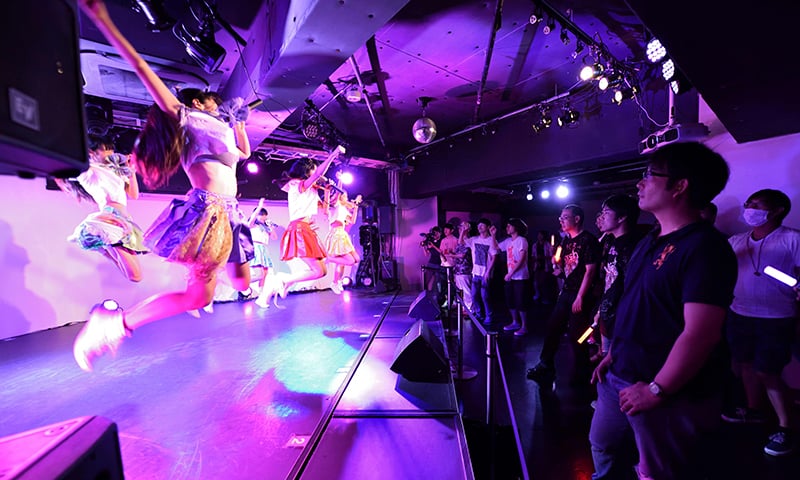
In a cramped and dark venue in a sleazy Tokyo district, dozens of middle-aged men cheer at a performer on stage: The object of their adoration is a six-year-old girl.
Decked out in make-up with ribbons in her hair, Ai is dressed like an adult, but still looks very much a child.
She is a so-called “idol” singer, common in Japan, where rights groups have complained that society's sometimes permissive view of the sexualisation of young girls puts minors at risk.
It was only in 2015 that possessing child pornography was criminalised and authorities are struggling to bring the country into line with other advanced nations on the issue.
In the crowd at an idols show, Soichiro Seki, 40, says he watches young girls on stage twice a week. He insists he goes just to encourage the performers and feels no shame.
But he did concede that other fans objectify them.
“(For them) coming to a concert like this and visiting a hostess club in Kabukicho are essentially the same thing,” he said, referring to Tokyo's major red-light district.
Idol Tama Himeno, who has performed on stage since the age of 16, says the men attending her shows worship the performers and crave communication with young girls that they cannot get elsewhere.
Most fans are “pure,” insists Himeno, now 24, although she admits she was once offered 30,000 yen ($260) for her used pantyhose.
“Men idolising young girls is relatively accepted in Japan,” said Himeno, citing the “Tale of Genji”, an 11th-century classic depicting a nobleman's romantic relationships with women, as well as a small girl.
For Ai's manager Hidenori Okuma, the men are attracted by the thought of contact with a “girl next door”.
“Meeting and chatting with high-school idols has become so popular,” said Okuma. “It's now less embarrassing to admit you like young girls. Now they (male fans) say they prefer primary school girls, without hesitation.”
A 'bizarre sight'
Ai's mother, Mami Yamazaki, says her daughter has wanted to be an “idol” singer since she watched an anime cartoon about young girls striving for stardom.
“On television, you see kids acting in dramas and commercials. In magazines, children are modelling clothes. What Ai is doing is not much different,” she says, despite the audience for idol shows being mainly adult males.
Yamazaki, 26, herself played in a band as a teenager and sees her daughter's performances as a way into the popular and lucrative world of idols.
It can be a pathway to fame, as demonstrated by Japan's AKB48 band, one of the most successful acts of all time, who started in a small stage in Tokyo's Akihabara, with the youngest member aged 11.
But getting a foothold into the idol scene means the child has to interact with adult fans, taking photos together and autographing the backs of their t-shirts.
“It must be a bizarre sight” for foreigners, admits Himeno but she stresses any sexual advances are an absolute “no-no".
'Not normal'
Japan's battle against paedophilia is well documented. The number of minors abused in child pornography has risen five-fold in the past decade, according to official figures.
Police have failed to stamp out so-called JK (Joshi Kosei, or high school girls) businesses, which offer men services such as going for a walk with a teenage girl so the customers have a chance to negotiate for sex.
Quasi-pornographic “chaku-ero”, or clothed eroticism, images of small children posing in tiny swimsuits, are easily found on the internet, slipping through a legal loophole.
Lawyer Keiji Goto, who campaigns for minors' rights, says the problem is a social one.
Many Japanese think that sexually objectifying young girls is not taboo but rather “just falls into a grey zone,” said Goto.
Japan is far from being the only place with a problem of sexualising children.
In America, concerns have been raised about the hyper-sexualisation of children appearing in beauty pageants, as well as on reality shows such as “Toddlers and Tiaras.”
The French Parliament in 2014 adopted a ban on “Mini Miss” competitions for girls younger than 13, prompted by controversy over a 2010 Vogue magazine photo shoot featuring provocative images of a 10-year-old.
But in Japan, there has been little public debate of the issue.
Psychiatrist Hiroki Fukui, who also treats paedophiles, says the awareness in Japan that children need to be protected from potential sexual predators is “so low".
He explained: “We need to realise this situation in Japan is not normal.”
Shihoko Fujiwara, the representative of an NGO that helps victims of human trafficking and sexual abuse, warned of a dangerous mindset.
“The girls will think to themselves the audience is crazy about them because they are small girls and because their value will reduce once they get to the age of 18.
“A society that allows children to have such a twisted self-identity can never protect them."