Pakistan is now energy surplus, says PM Abbasi



KARACHI: Prime Minister Shahid Khaqan Abbasi said on Wednesday that the country had become surplus in energy in a short period of four years starting from 2013 when the nation used to face up to 16 hours of loadshedding a day.
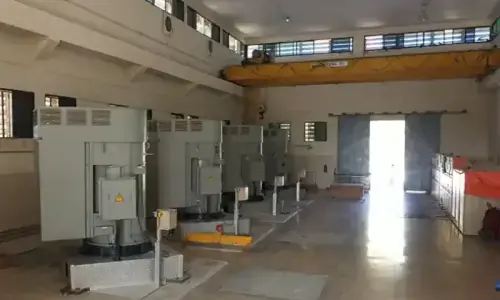
Speaking as the chief guest at the inauguration ceremony of unit one of the 1,320MW (2x660MW) Port Qasim coal-fired power plant, the prime minister said it was the second largest project under the China-Pakistan Economic Corridor (CPEC).
He said the completion of the power plant in a record period of 30 months at a cost of $2.8 billion was a great achievement on the part of the Port Qasim Electric Power Company Ltd and Private Power and Infrastructure Board.
Mr Abbasi said the plant was a symbol of Pakistan-China friendship and a milestone in the CPEC and Al-Mirqab Capital, Qatar. He praised Al-Mirqab Capital chairman Sheikh Jassim bin Hamad bin Jassim bin Jaber Al-Thani for his cooperation and financial support for the project.
The prime minister said that the coal-fired power plant was most environmental friendly and currently producing the cheapest electricity in the country. He said the governments often failed to complete projects within their respective tenures, but the Pakistan Muslim League-Nawaz government had completed a number of mega projects since it came to power in 2013.
This had been possible under the leadership and vision of former prime minister Nawaz Sharif and Chinese Premier Xi Jinping, he added. He said Port Qasim Electric Power Company Chairman Sheng Yuming had informed him that the second unit of the coal-fired power plant would start producing electricity from February next year.
The prime minister said the country was producing surplus power in 1999 and also planning to export electricity to neighbouring countries, but by 2013 it became energy deficient resulting in prolonged power outages.
He said the long delay in completion of the 400MW Nandipur power plant had resulted in cost escalation and made the nation suffer, but it was the PML-N government which managed and completed the project.
He said his government was not only working on increasing power generation but also exploring other sources of energy such as solar, wind-power and liquefied natural gas (LNG).
In order to meet the gas shortage, he added, two LNG terminals had already started functioning and another three were in the pipeline. Besides, the prime minister said, the National Electric Power Regulatory Authority had already reduced electricity tariff by Rs2 per unit which indicated that the government was equally safeguarding consumers’ interest.
Mr Abbasi listed a number of power plants being undertaken by the provinces, including those of 3,600MW by Punjab and 1,200MW by Sindh. The federal government is also undertaking a 2,000MW renewable energy plant.
The prime minister said that for the first time Thar coal development had become a reality, while massive investment was being made in transmission lines. This was possible because the government had managed to remove bureaucratic hurdles and defeated vested interest, he claimed.
He said the required infrastructure was being developed on a fast track basis for industrial development that would create more jobs in the country.
Two more coal-fired power plants are in the pipeline at Port Qasim and besides three more LNG terminals, the government is also working on an LPG terminal.
Among the dignitaries present on the occasion were Sindh Governor Mohammad Zubair, Minister for Maritime Affairs Mir Hasil Benzjo, Minister for Energy and Power Awais Ahmed Khan Leghari, the Chinese ambassador to Pakistan, the corps commander and Rangers director general.
Published in Dawn, November 30th, 2017