Shaheer Niazi, the 'electric honeycomb' researcher, aims to bring the Nobel home



Shaheer Niazi, the 17-year-old Pakistani student who recently surprised much older scientists with his groundbreaking research on electric honeycombs, recounted his journey beginning with the "World Cup of Physics" to being recognised by the Royal Society and the media in DawnNews show 'Newswise' on Friday.
Upon returning from the International Young Physicists' Tournament in Russia in 2016, Shaheer said he decided to get published after receiving encouragement from his mother. He then worked until he was finally able to come up with something worth publishing.
"We have to add something new [to existing knowledge] to get published and I introduced two new factors in the electric honeycomb phenomenon," he said.
He reveals he was only 16 when his research was published in the Royal Society Open Science journal. "Newton was 17 when his first research [paper] got published in the same journal," Shaheer said with a smile.
He said he received an email form a New York Times journalist referring to him as "Dr Niazi".
"I replied that I don't know whether I can be called a 'doctor' because I am just a 17-year-old student. Nobody knew before this that I was just 17."
"She also discussed it with the author of the original research, which was incredible for me," Shaheer said.
But the attention his research received after being discussed in the New York Times surprised him the most. "It was a very small thing, and only four to five research papers had been written on it, so I did not think it would get such publicity," Shaheer said.
He is now aiming to win the prestigious Nobel Prize again for Pakistan, and is looking to continue his work at a top university, like the Massachusetts Institute of Technology (MIT).
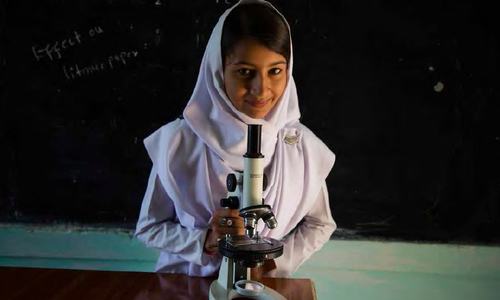
With the lack of quality education in the country, Shaheer feels students should use the internet to supplement their learning.
"There are online courses that I have been taking since I was very young," he said, suggesting that everyone interested in learning beyond classroom curricula should take free online courses from websites like Coursera and EdX.