Pakistani schools (especially government schools) are producing unacceptably low levels of learning outcomes in maths and science — a stark reality which represents a significant and deep-rooted challenge to Pakistan’s economic growth.
“We gave telescopes to a school but the head master would not take them for there were no teachers up to the task of visiting the school after sunset for lunar or stellar observation," says Dr Sabieh Anwar, Lahore University of Management Sciences (LUMS), Lahore.

In a report titled 'Powering Pakistan For The 21st Century', Alif Ailaan published the state of education in mathematics and science across Pakistan. Here are the key findings:
1. The average maths score for Class IV students in the National Education Assessment System (NEAS) exams conducted in 2014 was 433 out of 1,000 .
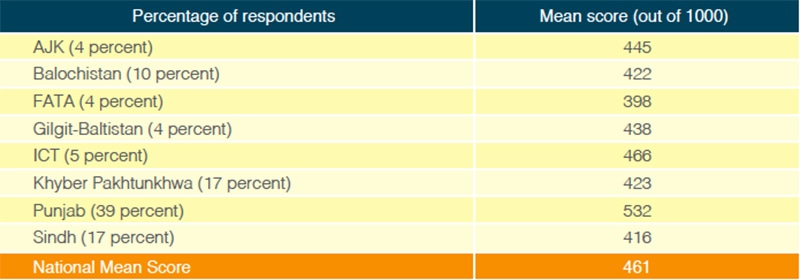
2. Science results are in an equally deplorable state: Out of four provinces and four regions, not a single one showed an average science score of over 50 percent.


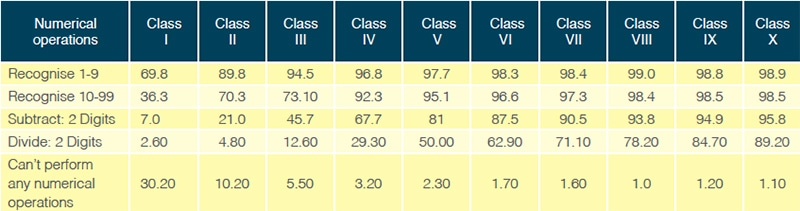
Here is a percentage breakdown of children who can:
- recognise numbers from 1-9 and 10-99
- do two digit subtractions
- do two digit divisions
- cannot do any of the three basic numerical operations.
Students fared most poorly on questions that involved measurement and geometry.

Islamiat is the subject in which students do best

Science teachers regard certain topics as harder to teach

What are the reasons for such low levels of math and science learning? The report says:
A political economy in which the odds are stacked against maths and science education
Government structures and systems, at both the policy level and the administrative level, that privilege inputs and those delivering them, and therefore prevent a greater focus on children and on learning outcomes, especially in maths and science
The standard of education in governments being so low that they are the least preferred option
A national stock of teachers that, although improving in recent years, has been historically so bad that it has produced an intergenerational problem of low quality teaching in today’s classrooms, perpetuating low quality teaching endured by teachers when they were students
The challenge of low quality content being taught in maths and science, and how the assessments and examinations systems are reinforcing poor learning outcomes; in addition to the quality of content, how material is taught is also a significant challenge. Pedagogical improvement is another area that needs attention

Pictures, statistics and graphs courtesy of Alif Ailaan.