0
0

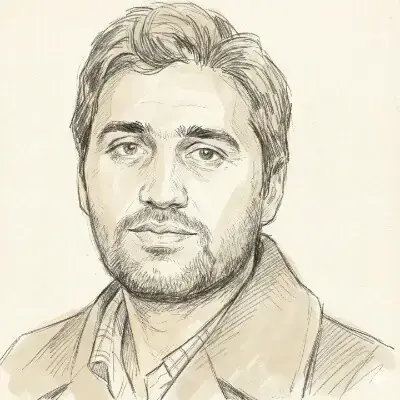
ISLAMABAD: Visiting Mr Books has always been a pleasant experience, primarily because the shop owner, Yousaf Bhai – as he was known among Islamabad’s book lovers – would welcome you with a vibrant mood and a mischievous smile. He was famous for his jokes and one-liners, but when I last met him a week before Eid day at his bookshop, he told me he was not well.
He had been ill for the past year, and his vibrant mood had vanished. He would ask me to pray for him whenever I met him during my thrice-weekly visits to Mr Books. He died on the second day of Eid in Islamabad.
For the past year he would sit on a chair in front of the bookshop’s counter, as his frail health did not allow him to keep standing while welcoming customers. In my 25-year association with Mr Books, I had always seen Yousaf Bhai standing in the middle of the shop directing visitors to the shelves. He was not just a businessman dealing in books, he knew books and loved them. He used to travel to international book festivals to buy books in bulk.
One day early this year, when I visited Mr Books, Yousaf Bhai was visibly excited to see me. “I have something special for you,” he said, and showed me a book on the ISI – Faith, Unity, Discipline by a German scholar.
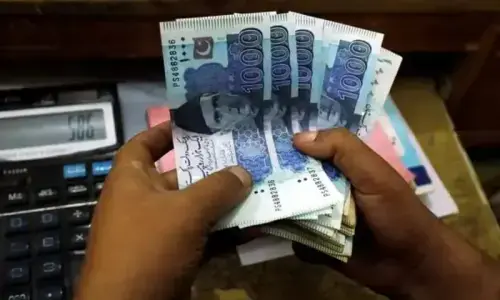
After scanning the book for a minute or so, I saw that it was worth Rs8,900. I told him the book was extremely expensive, and that I could not afford to buy it.
“These are the early days of the month, you can spare this much from your salary,” Yousaf Bhai retorted, with that mischievous smile on his face with which we were so familiar. I told him it was way out of my range. A few days later I received a call from Yousaf Bhai.
“I have a solution, wait for a month and I will give you the same book for Rs1,650.” Exactly a month later I got my copy of the book, published by a different foreign publishing house.
It was these kinds of solutions for middle class bibliophiles like me that made Yousaf Bhai my best friend and a friend to hundreds of book lovers in Islamabad.
In 1992, when I started working for a local newspaper after completing my masters in journalism from Punjab University, I developed acquaintance with him. Upon receiving my first salary I visited Mr Books to purchase a collection of poetry of the famous Urdu poet Nasir Kazmi. There I was told that they didn’t have the book on their shelf. I checked other bookstores in town and got the same response.
I had spent my student life in Lahore – a city which hosts most of the publishing houses of the country – and it was shocking to me that the whole of Islamabad did not have a single copy of Nasir Kazmi’s collection. I went back to Mr Books to express my shock to Yousaf Bhai. He assured me: “Don’t worry, I will get you a copy of the book within two days and on discounted price.”
But there was another reason which endeared Yousaf Bhai to us. It was the availability of unique books that are not available in some of the most modern bookshops that have emerged in town over recent years. In the absence of public libraries and the low quality of books in public libraries that exist in the capital city, Yousaf Bhai’s bookshop has acted like a public library. I familiarised myself with the writings of the great Indian historian Romila Thapar while searching for books on the shelves of Mr Books.
With great relish, he used to narrate visits some of the top political leaders of the region had made to his shop. He told me that military dictator Gen Ziaul Haq visited his shop twice. The former Indian prime minister, Narasimha Rao, also visited Mr Books while he was on a visit to Islamabad as a minister in Rajiv Gandhi’s cabinet.
Yousaf Bhai was a source of unique knowledge about the book business and trends in reading habits of Pakistanis. He once told me that there were only two books (by local authors) which sold in the hundreds in the last 15 to 20 years. “It was only Tehmina Durrani’s
My Feudal Lord and Gen Musharraf’s In the Line of Fire that sold in hundreds in Islamabad,” he once said to me.
“Pakistanis have little habit of book reading and book buying.” However, things had started to change over the last year, according to Yousaf Bhai.
“I have seen a change in the pace people in Islamabad are buying books, there are more frequent visits to bookstores and more buying of books,” he said almost six months ago.
Published in Dawn, September 7th, 2017