2
2
KARACHI: Two major cells of banned militant outfits allegedly involved in some recent terrorist acts in Karachi were dismantled after being traced through the use of technology by police, it emerged on Monday.
Police investigators also identified various groups of criminals in the city with the support of the Integrated Ballistics Identification System (IBIS).
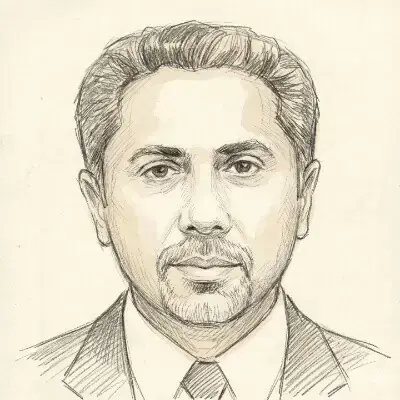
“Through the use of modern technology, we are moving [towards the] rule of law departing from the medieval-era tactics of investigation,” said Additional IG Police Dr Sanaullah Abbasi, who heads the Counter-Terrorism Department of police in Sindh, while speaking to Dawn.
AIG Abbasi said the IBIS, introduction with US support, allowed the police department to improve its forensic capabilities. It also had an immediate and a very positive impact on the detection of major terrorism incidents, he added.
Busted cells include those linked to LJ, TTP
“At least two major cells of hitmen affiliated with banned outfits have been detected and dismantled. They were involved in recent major terror acts in the metropolis,” said the CTD chief.
One of the cells was linked with the outlawed Lashkar-i-Jhangvi (LJ), operated by Asim alias Capri and Ishaq alias Bobby, he said, adding that the LJ hitmen were involved in the murder of 72 persons from 2015 to 2016.
The victims included 31 police officers, four army personnel, four Rangers’ officials and renowned qawwal Amjad Sabri.
“The weapons recovered by the CTD team were matched with the spent bullet casings found at the crime scenes. Their positive result was a very significant piece of technical evidence that corroborated the statements of the held suspects,” said the CTD head.
AIG Abbasi said another cell detected and dismantled was linked with the Mufti Shakir-led Tehreek-i-Taliban Pakistan group. This group was involved in the recent targeted killing of policemen, particularly in Korangi and Abul Hasan Ispahani Road areas, and members of the Shia Ismaili and Bohra communities, he explained.
The CTD chief said the TTP cell comprising 12 members was neutralised, as four of them were arrested while others had been killed in exchange of fire with law enforcers.
About the strength of this identification system, AIG Abbasi said the greatest advantage was that it could not be tampered with.
“In the past, questions have been raised about the validity of manual matching of empties and whether positive matches were actually truthful or not, but the IBIS rules out this element of doubt,” he said.
Previously, the CTD chief said, the police did not have any systematic way to check confiscated weapons through a centralised database. But the newly introduced system was a fool-proof forensic method of detecting crime or at the very least identifying crime patterns, he said, explaining that the confiscated weapons could be checked through the entries made in the IBIS but with the condition that its record extended as far back as 2014 only.
AIG Abbasi said that IBIS had allowed police investigators to collect reliable information about the kinds of criminal groups operating in different areas. Matching spent bullet casings collected from one crime scene with those seized from another gave significant clues to the kind of criminal groups operating in different areas and their possible motives, he said.
The CTD head explained that the number of weapons used in more than one case allowed the investigators to streamline and focus their inquiries.
About possible expansion of this technology, AIG Abbasi said there were future plans to expand the IBIS database by retaining the sample of one spent bullet casing fired from each licensed weapon in the province. He said this would hugely expand the database as well as its benefits and could be a step towards an integrated forensic crime management system in the province.
Published in Dawn, August 29th, 2017