1
1
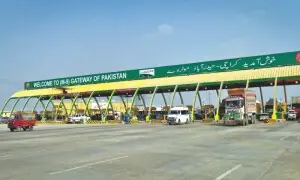
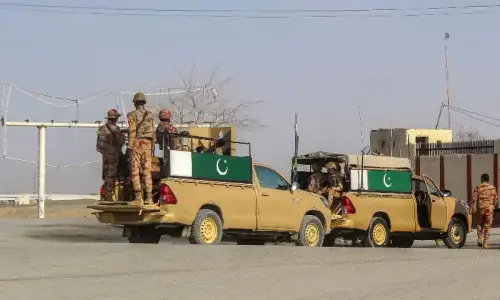
THE reopening of the border between Afghanistan and Pakistan is a welcome and sensible move. The closure for over a month, after Pakistan accused Afghanistan of not doing enough to act against anti-Pakistan militant sanctuaries in eastern Afghanistan, had serious socioeconomic implications for the populations on either side and caused bilateral ties to plunge to yet another low. The retaliatory, knee-jerk response by Pakistan did not make sense then, nor does it appear to have achieved much. Predictable third-party intervention, this time by the UK, which for a while has stepped up its diplomacy in the wake of desultory US policy, has likely wrested compromises from both the Afghan and Pakistani sides, but it remains to be seen if private commitments are realised in public actions. The pattern of terror attacks causing a rupture in ties and then papered over until the next downturn has become distressingly familiar.
Clearly, cooperation between Afghanistan and Pakistan can help radically reduce terrorism and militancy in the region. Particularly when it comes to fighting the militant Islamic State group in the two countries, the possibility of security cooperation is obvious and real — neither Afghanistan nor Pakistan have any tolerance for an IS that has upended the political and security dynamics of the Middle East. Yet, lingering suspicions and mutual mistrust, particularly when it comes to strategic and long-term interests, on both sides has thwarted meaningful cooperation. But past failures and recent strains should not be reasons for diplomatic surrender. Just as Kabul cannot expect Pakistan to resolve the old problems — Afghan Taliban sanctuaries in Pakistan and perceived foot-dragging over an eventual dialogue process — without addressing the new — anti-Pakistan sanctuaries in Afghanistan — Islamabad cannot expect the opposite. The security establishment here may want its demands addressed urgently, but Afghanistan either has limited capacity or lacks the will to address Pakistan’s immediate concerns.
Indeed, the common sense path is to ramp up security cooperation, using the full force of diplomacy to nudge the Taliban into a regional peace framework. An Afghan government that is pursuing peace with the Taliban may find itself in a better position to address Pakistan’s security concerns and strengthen border management and cooperation. Following the US and China, a third major power, Russia, is now attempting to broker a peace process — yet another opportunity for durable talks to be launched. Where previous efforts have been a failure there has been a perception on the part of Kabul or the Taliban that the dialogue is tilted against them. To assuage the doubts of the Afghan government, Russia has sent the right signal by extending an invitation for a regional dialogue, engaging Kabul and reiterating a path to peace for the Taliban. A negotiated peace is the only sustainable solution for all parties involved.
Published in Dawn, March 22nd, 2017