0
0

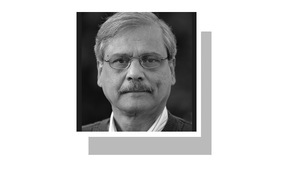
People know Dr Adeebul Hasan Rizvi because of his landmark Sindh Institute of Urology and Transplantation (SIUT) alone.
The grey-headed doctor, when sat at a Lahore Literary Festival-2017 session with Hameed Haroon, it emerged he has been a student leader and a fighter against corruption and ethnic and sectarian threats too. The session discussed Dr Rizvi’s life from his birthday – Sept 9, 1938 – to date, amid frequent thunders of applause.
Though cool and unassuming, the doctor said he had been sent by his mother to Karachi from their hometown of Kalanpur in pre-Partition era for his parents got panicked because of communal riots. He was 17. In Karachi, when he was admitted to the DJ Science College, the activist in him came to the fore. He launched a campaign for merit-based admissions. He confronted the top authorities like Maulvi Tameezuddin and Mushtaq Gurmani. He had to spend 13 months in jail. Later, he lived in hostels as a student and observed the sufferings of patients, which impacted him for the rest of his life. In college, he met Hajra Shabana, who later became his wife and stood by him through thick and thin till her last breath. She is no more. After completing graduation in medicine from Pakistan, he went to London, where the National Health System inspired him. He returned to Pakistan with a vision: he started with an eight-bed facility in the Karachi Civil Hospital 40 years ago.
Dr Rizvi developed such work ethics and inspired junior doctors, that the autonomous facility has become one of the largest free treatment provider in South Asia. Up to 70 per cent of the expenses are generated from public donations.
The success story was made possible because of Dr Rizvi’s unflinching courage, narrates Mr Haroon. He foiled government authorities’ bids to mint kickbacks on imported machines; he flouted MQM’s orders not to treat Sindhis; now he shrugs off militants’ threats for his sectarian connections.
Actress Nadia Jamil read out the charter of SIUT. He received a standing ovation when Mr Haroon announced the LLF Life Time Achievement Award for the great doctor.
ZAHRA NIGAH: It was a treat to ears to listen to celebrated poet Zehra Nigah with Arfa Sayeda Zehra at the session – Zahra Apa ke sath sath.
Nigah’s core message in her written speech and later in a candid discussion with the moderator was: keep the hopes high and alive.
Her audience was particularly the youth.
Being a poet, she has kept the philosophy of hope as the main subject of her lines.
Who is a poet?
“The one, who expresses the sufferings of others as their own,” she went on. This is not with consequences. The poet either gains pleasure or suffers pains.”
About the pains, she said, she had been observing the growth of Pakistan.
“The 70-year-old country may not look too old; science has improved the life expectancy of humans, but in Pakistan, the institutions which are to work to improve the life expectancy have suffered a gradual degradation,” she bemoaned.
Politics and religion, according to her, were being exploited by the elements for vested interest.
The audience looked gloomy.
The poet, however, came up with the verses, written 200 years ago, by legends like Sauda and Meer and later Dr Iqbal to infuse hope and happiness among the people.
People received the verses with cheers. They were, however, more eager to listen to Ms Nigah’s eternal poems from her own mouth.
The moderator diverted the discussion to the recitation of poetry.
Ms Nigah started with reciting her poem “jangloo ke bhi dastoor hota hay (Jangles have laws too)”.
Almost all the eyes welled up when she recited the poem “Me bach gai ma (Mom, I’m saved)”, that is the shriek of a baby girl, who never gave her first cry on the earth, thanks to abortion techniques.
The poem, written decades ago, is still relevant. Of course, life is tough for girls in our society.
Published in Dawn, February 26th, 2017