EVERY conflict introduces new innovative techniques and targets. While terrorists have always considered improvised explosive devices (IEDs) a handy option, the frequency of IED attacks has increased since 9/11.
IEDs, also known as homemade bombs, may be time- or remote-triggered, and are usually planted along the roadside and detonated when their targets pass through in their vehicles. They are attractive to extremists in Pakistan, Afghanistan and Iraq because they are cheap, easy to make and minimise their own casualties as compared to suicide bombing.
While technology has undoubtedly accelerated its use, some form of IED has been in use in warfare for centuries. The use of the term ‘improvised’ is suggestive of its makeshift nature — used by insurgencies with a lack of access to superior weaponry but the desire to inflict maximum damage.
In Pakistan, Balochistan, Fata and KP are the worst IED-affected areas. In Afghanistan, Kandahar and Helmand are particularly affected. The proliferation of IEDs is more dangerous than that of arms and ammunition. Over the past decade, casualties of IED attacks in Iraq, Afghanistan and Pakistan amount to more than any other form of extremist violence.
IEDs appeal to extremists because they are easy to make.
In 2011, 17,499 civilians were killed or injured by IEDs across the world — in 2013, this number increased to 26,887. In 2013, 73.4pc of civilian casualties resulted from explosive weaponry — hence terrorist organisations increasing reliance on this method. In 2013, the militant Islamic State group carried out 4,465 IED attacks. In 2014, the number of civilian casualties from bombings rose by 5pc and the bombings incident rate increased by 11pc globally from 2013.
A total of 1,953 IED blasts have been registered in KP from 2004-14; 2013 being the worst year, and Peshawar, Charsadda, Swabi, Swat, and Bannu being the worst affected. The frequency and location of attacks reveal the proximity, and vulnerability, of tribal areas in KP and some pockets of Balochistan. On Sept 16, 2013, a major general lost his life in a roadside IED attack on military vehicles in Upper Dir. Such ‘successful’ missions boost the morale of hidden enemies.
Countering the destructive consequences of IEDs requires both timely intelligence and highly trained Bomb Disposal Staff. A few years ago BDS in KP were stationed only in Peshawar. Realising the enormity of the challenge, KP’s police management sought to ensure the availability of BDS services in other parts of the province — increasing its size up to 500 officials and opening Pakistan’s first explosives handling school in Nowshera. Since 2008, BDS in KP have defused about 6,000 IEDs. So far, 15 officials have lost their lives in the process. One such person was Inspector Hukam Khan, who had defused 200 IEDs in 2012 alone.
Recently, Sindh police have started to use robotics for detection. The anti-IED robot can climb stairs, detect an IED or other explosive device within a radius of one kilometre, and is capable of defusing a suicide jacket with minimal chance of explosion. This technology was first used in the security protocols for a religious procession in Karachi. Still, the non-availability of equipment and technology is a serious issue for law enforcement.
However, post 9/11, donors donated state-of-the-art equipment but owing to capacity issues the dividends of technology are yet to be attained.
According to a 2010 study by the New America Foundation, “from 2002-09, 701 [IED attacks] in Balochistan, 368 in Helmand and 689 in Kandahar were reported. With 180 IED explosions in Balochistan, 2006 proved most horrible”. During this period, there were 226 casualties as a result of 177 incidents in Dera Bugti, and 827 casualties in 242 incidents in Quetta. The highest casualty rate was 8.9 per IED incident for Nimroz, Afghanistan — the rate was 4.2 for Quetta.
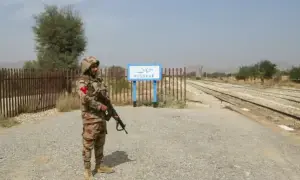
From the pattern of IED attacks in Balochistan, it transpires that the architects of these attacks primarily targeted vital installations such as railway tracks, electric towers, gas pipelines and bridges — hence avoiding major human casualties. By doing so, their prime objective was to disrupt the pace of development.
Terrorists persistently upgrade their tactics — now placing explosives inside the vehicle, popularly known as ‘vehicle-borne improvised explosive device’. VBIED attacks have escalated worldwide in the past few years; 484 car bombings were reported in 2013, as compared to only 156 car bombings in 2011.
The hidden enemy is being strengthened, owing to easy availability of cheap bomb-making components, such as fertiliser and batteries, in the marketplace, and the proliferation of bomb-making expertise. Its disappearance from use in the near future seems a remote possibility considering its effectiveness — but steps must be taken, and the prevention of its proliferation requires organised and collective efforts.
The writer is a police officer.
Twitter: @alibabakhel
Published in Dawn, June 23rd, 2016