ISLAMABAD: While the government’s plan to streamline the registration and monitoring of religious seminaries appears to be a pipe dream, the number of madressahs in the country, as well as the number of students enrolled in them, has been on the rise.
Even though seminary boards offer different reasons for the growing number of students and institutions in the country, the administrators of all five mainstream seminary boards believe that a lack of a clear policy was augmenting negative growth as well.
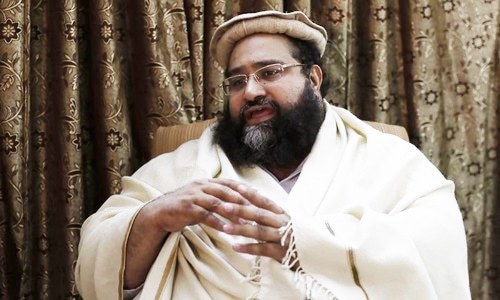
“The government is not doing anything, but it wants the five boards and the seminaries registered with us to be as perfect as a polished shoe,” said Sahibzada Abdul Mustafa Hazarvi, nazim-i-ala of the Tanzeemul Madaris Ahle Sunnat, the board for seminaries affiliated with the Barelvi school of thought.
“It was only due to misconduct that Wifaqul Madaris al-Arabia de-listed Jamia Hafsa in Islamabad in 2007, in wake of anti-state political activities. But what have the authorities done? The seminary still continues to hold classes, is increasing its branches, enhancing the number of students and even criticises the board for not registering it — this is the writ of government in Islamabad,” Sahibzada Abdul Mustafa exclaimed.
He said that there were around 9,000 madressahs affiliated with the Barelvi school of thought, imparting religious education to more than 1.3 million students. He said that there has been an increase of 10pc in the number of seminaries and students as compared to the previous year.
“To my understanding, the main reason for the proliferation of seminaries and seminary students is due to the growing population and a rise in poverty, since people cannot afford to send their children to schools,” said Mufti Muneebur Rehman, head of the Ittehadul Tanzeemat-i-Madaris-i-Deenia, an umbrella body of the five mainstream madressah boards in the country.
Four of the boards belong to the Barelvi, Deobandi, Shia and Ahle Hadith schools of thought, while the fifth, Rabtatul Madarisul Islamia, administers institutions affiliated with the Jamaat-i-Islami.
“There are around one million students in over 1,000 seminaries and that is because they are large institutions,” said Maulana Abdul Maalik, nazim-i-ala of Rabtatul Madaris, adding, “the number of students is on the rise because Western propaganda has prompted citizens to learn more about Islam.”
He said that the mass public participation in Mumtaz Qadri’s funeral was a clear indication that the people are against the policies of the present government.
“They might take up any issue against the seminaries to divert attention, because the government is weak and vulnerable and the Panama leaks have exposed them,” Maulana Abdul Maalik added.
Among the five mainstream boards, the largest network of seminaries belongs to the Deobandi school of thought, which are registered with the Wifaqul Madaris al-Arabia.
“Around 18,600 madressahs are registered with us countrywide, and they are imparting religious education to more than 2,000,000 students, both boys and girls” said Abdul Qudus Mohammadi, spokesman for the Wifaqul Madaris al-Arabia.
The board for madressahs belonging to the Ahle Hadith school of thought is the Wifaqul Madaris al-Salfia, which has 1,400 registered institutions with around 40,000 students.
Mohammad Yasin Zafar, the nazim of Wafaqul Madaris al-Salfia, said that the number of students was increasing as many Ahle Hadith communities, including those in Karachi, had established seminaries imparting both religious and contemporary education.
There are around 460 seminaries affiliated with the Wifaqul Madaris Al-Shia, with a strength of around 18,000, mostly boys.
However, the spokesperson for the Wifaqul Madaris al-Shia said that only a nominal increase had been witnessed in the number of students or seminaries and attributed it to an increase in the population.
“While we represent the wifaq, we still believe that the number of madressah students should be proportionate to the demand for them,” said Nusrat Ali, spokesperson for the board. “An oversupply of clerics will lead to a disturbance of the system and reduce their respect in society.”
Published in Dawn, April 29th, 2016