1
1
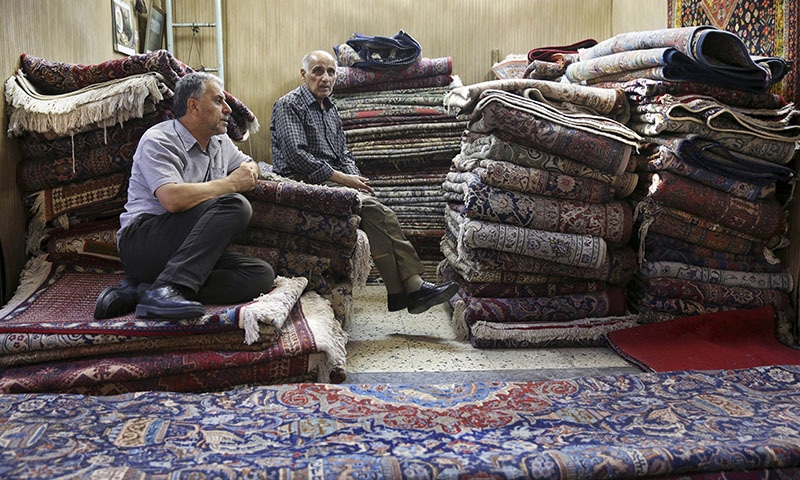
TEHRAN: Iran's famed carpet weavers are busy at work following the country's historic nuclear deal with world powers, anticipating a boost in exports as sanctions are set to be lifted in the months ahead.
"The Persian hand-woven carpet is Iran's ambassador. I'm delighted that the ambassador is in the process of resuming work in the US," exporter Jila Rassam Arabzadeh said this week. "The Persian carpet is like the Iranian flag, known all over the world. Let our flag fly."
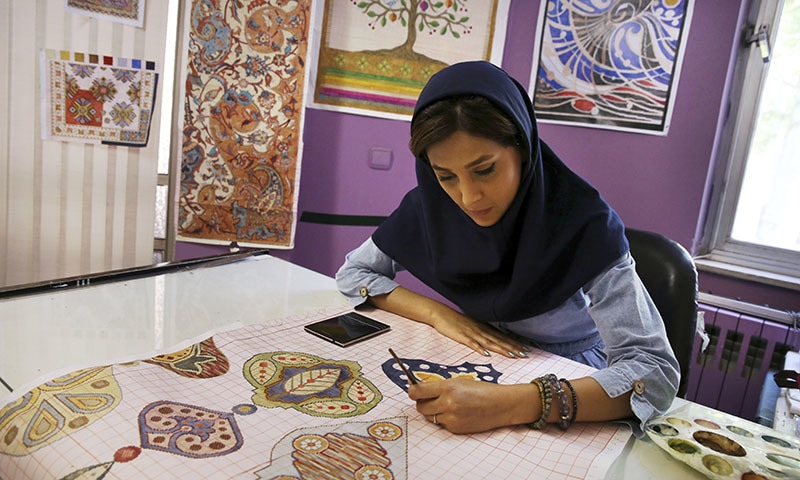 |
| An Iranian woman sketches and paints carpet patterns at a workshop in the Cultural and Artistic Carpet Foundation of Rassam Arabzadeh in Tehran, Iran. - AP Photo/Vahid Salemi |
The landmark July 14 nuclear accord between Iran and six world powers - the US, Britain, France, Russia, China and Germany - is meant to curb Tehran's nuclear program in exchange for lifting crippling international sanctions. As part of the deal, the US will resume imports of Iranian carpets, which were halted in 2010.
Persian carpets were the Iranian non-oil commodity that suffered most as a result of sanctions. The US market had made up one-fifth of Iran's carpet exports.
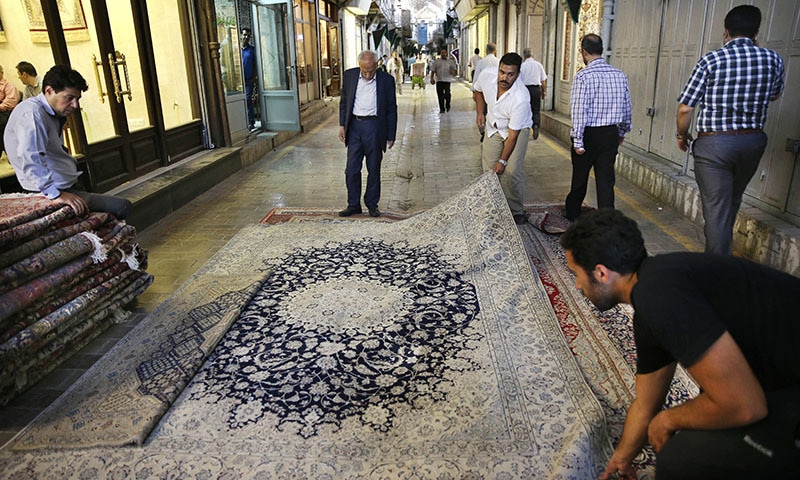 |
| Iranian merchants display a carpet at the Tehran's old, main bazaar, Iran. - AP Photo/Vahid Salemi |
Hamid Kargar, president of Iran's national carpet center, said producers in the Islamic republic are already making carpets with Americans in mind and are hopeful that trade will resume next year.
"People in the carpet business have begun to produce carpets suiting the taste of the American market, receiving orders and negotiating with customers," he said. "Since 2010, we lost one-fifth of our exports because we were deprived of the US market. Our rivals replaced Iran. However, we expect that Americans will welcome Persian carpets again because of its unique designs and colors."
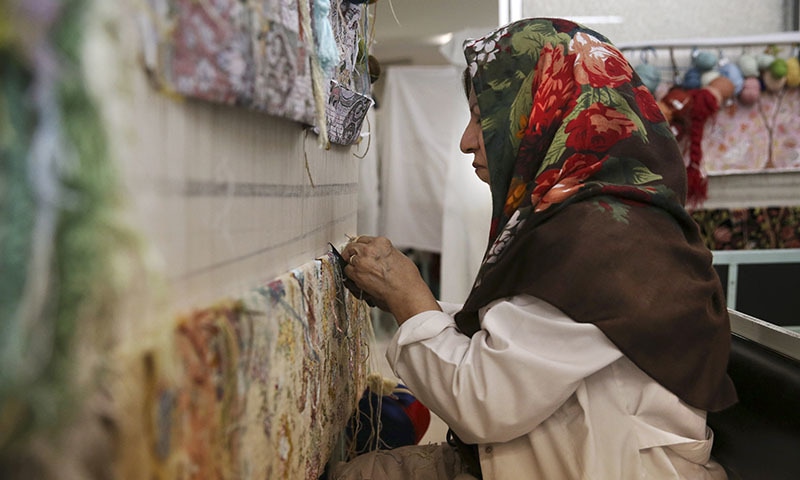 |
| An Iranian woman weaves a carpet at a workshop of the Cultural and Artistic Carpet Foundation of Rassam Arabzadeh in Tehran, Iran. - AP Photo/Vahid Salemi |
Iran exported $330 million in Persian carpets last year. Exports account for two-thirds of Iran's carpet production, which now stands at over 5 million square meters (53 million square feet) a year.
The Islamic republic was once the world's biggest carpet exporter but the industry has been hampered by the sanctions and competition from cheaper Indian, Pakistani and Chinese copies of traditional Iranian patterns.
Arabzadeh, the carpet exporter, said she is preparing to respond to a variety of American customers. "Americans and Canadians prefer light colors but the older generations go for darker ones. We are reassessing to meet the demands of our American customers," she said.
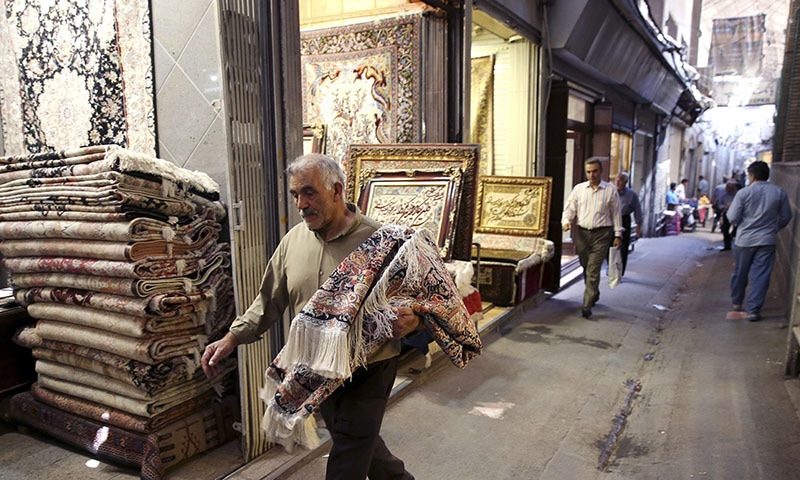 |
| An Iranian man carries a carpet through Tehran's old, main bazaar, Iran. - AP Photo/Vahid Salemi |
Hand-woven Persian carpets can range in cost from several thousand dollars to multi-million dollar floor coverings fit for palaces.
In 2000, Iran shipped a giant hand-woven carpet to the king of Oman worth $5.2 million. In 2006, Iran produced the world's largest hand-woven floor covering, worth $8.5 million, for the Sheik Zayed Mosque in Abu Dhabi, the United Arab Emirates.
Iran is also seeking to resume exports of pistachios, another major Iranian non-oil commodity.
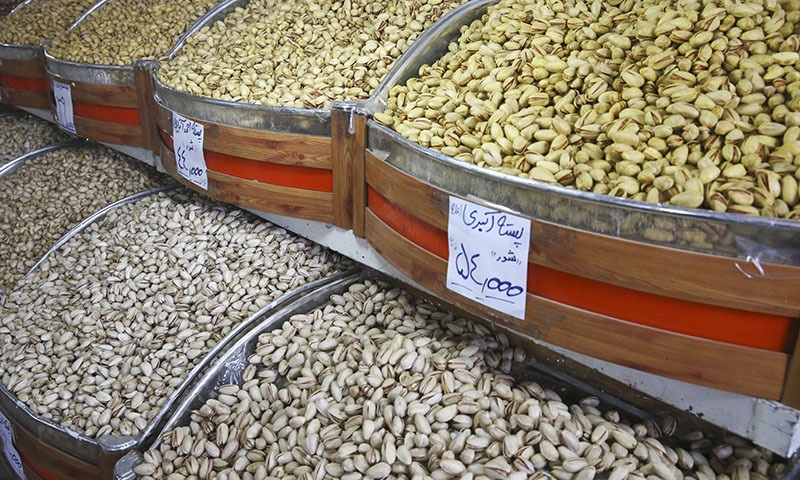 |
| Pistachios are seen at a shop in Tehran's old, main bazaar, Iran. - AP Photo/Vahid Salemi |
However, in past decades, the US itself has become a major pistachio producer and Iranian imports face 300 percent duties. The tax was imposed to protect American producers, according to Mohsen Jalalpour, head of Iran's Chamber of Commerce.
He's confident, though, that Iranian pistachios have a special advantage. “Americans like the taste of Iranian pistachios more than that of their own,” he said.