|
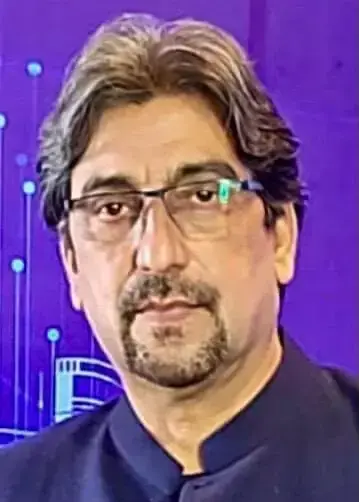
| Aurengzeb at the site of mourning of his son. |
As the winter sun settled in the shadows, the old man nodded at visitors, lifting his hands in silent prayer every time someone came to condole his son's death.
But when darkness enveloped the sky and the mercury dropped, so did his stoic expression. The glow of the coals glinted off his cheeks as he wept huddling around the fire.
“It seems that only yesterday, I took my son for his first day in school, and today I took my son to the graveyard to bury him with my own hands.”
Aurengzeb's 15-year-old son Hasan Zeb left his home for the Army Public School along with his younger brother Musa Zeb on Tuesday, but will never come back.
“He made qahwa for me and hugged me, his mother kissed his forehead. I should have curled him in my lap and kept him there forever.”
 |
| Hasan Zeb. |
After the morning assembly that dreadful day, Hasan Zeb went to the auditorium with other 10th grade students, and his younger brother Musa went to his own classroom. The auditorium became the execution hall in the eight-hour long massacre by the Taliban, in which 132 students and nine of the staff died.
In the aftermath, the auditorium was a scene of unspeakable horror — bullet holes in doors and windows; blood congealing on the cemented floor, flowing between rows of seats, pooling under benches where children tried to hide; bloodied bare footprints of children trying to flee before being gunned down.
The blood stains on the notebooks had started to turn brown. I couldn't look away from a pair of broken, trampled spectacles splattered with blood. So much blood. I imagine it trickling across my notebook as I write this.
 |
 |
Hasan’s brother Musa saw the Taliban militants entering the school from his classroom window.
“Within seconds they started firing with their Kalashnikovs and hurling grenades. They wore masks and suicide jackets. Our teacher screamed, telling us to lie on the ground and recite the Quran. I threw myself on the floor.”
After two hours, Musa came out and saw his school littered with bodies.
"I didn't know my brother was inside the auditorium. I saw him when I came home, lying quietly. Not in his uniform, but in a shroud."
Anas Khan, an eighth grade student was also inside the auditorium like Hasan Zeb, but luckily survived. He is now in Lady Reading Hospital with bullet injuries.
 |
| Musa Zeb (L), the surviving younger brother of Hasan Zeb. |
 |
| Anas Khan at Lady Reading Hospital. |
“They yelled Allah O Akbar (Allah is great) and started firing. ‘Nobody will be spared,’ they shouted in Pashto. I hid myself beneath the desk. I lay there like I was dead. I was surrounded by the dead bodies of friends who had been shot in the head. A bullet hit my arm… I was in unbearable pain but I stuffed my tie in my mouth so I would not scream… from the floor, I could see men with ankle high boots leaving the hall. I waited and dragged myself out of the hall and was finally rescued by army commandos.”
As the night faded, grief-stricken father Aurengzeb wanted to go to the graveyard to sit next to his son’s grave. Inside the house, the mother clutched her son’s uniform and stared blankly. When I left, Musa Zeb was trying to feed his brother’s pet parrots, whom he said are refusing to eat or speak.
Walking through another neighbourhood, Gul-e-Bahar, I see lampposts in every street hanging, with funeral announcements of children. Peshawar was known as Pushkalavati (Lotus City) in the ancient days.
"Today it is the funeral of the flowers," says Asad Khan.
 |
| Funeral announcements fight for space at these posts. |
I reach the graveyard where mourners are trickling in. My earliest memories are walking to the graveyard with my mother where she wept over my father's grave. Then, drying her eyes, she consoled me, saying 'those who are taken from us go to heaven and become stars'.
In the face of pain, grief and unstoppable tears, it was no consolation then. And it isn't one now.
Photos by Tariq Mehmood
Related: