84
84

"Imran Khan is a vitriolic, power hungry political beast out to do all he can in pursuance of his goals, including undermining the parliament, sabotaging the economy and even destroying Pakistan if that's what it takes! Please, be wary of him!"
So goes the crux of the message of a slew of advertisements blanketing most current affairs TV channels for the past two weeks.
The backdrop is a war of words between Imran Khan & Co and Nawaz Sharif & Co; transforming into a war of barbs and insults first through angry finger-wagging atop containers and frothy-mouthed counter-press conferences, and now seeping – as a political one-up on the former by the latter – onto TV screens lit up in our homes.
So, how ethical is this political cat-calling on TV through advertisements, whose origins were initially kept secret, both in terms of who was paying and how much?
For several days, there was no declared identity of the advertiser or source of payment, though it was pretty obvious.
Now, however, it’s official: the “Government of Pakistan.”
Also read: Of wet shalwars and televised 'revolutions'
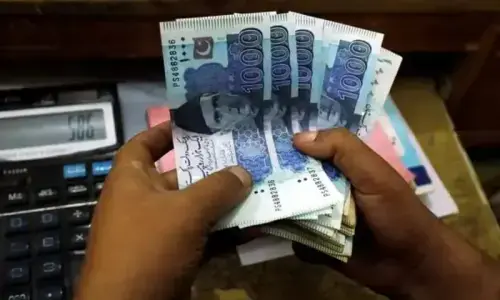
This means the advertiser is the government of Prime Minister Nawaz Sharif and the source of payment are public funds – our tax money.
Is this fair?
There are two ways to unpack this. The first is legal and the second is ethical.
The legal aspects
Legally, according to PEMRA Content Regulations 2013, no advertisement can be slanderous (spoken defamation), ‘distort persons and national leaders,’ ‘fan hatred,’ ‘militate against dignity of persons,’ and be ‘offensive.’
| ۔ |
The government advertisements against Imran are ostensibly guilty of all these.
Importantly, liability for these offenses lies with both the advertiser and the broadcaster because the same regulations refrain TV channels from running such advertisements.
The other legal aspect is the quantum of advertisements.
Under the PEMRA Ordinance itself as well as the PEMRA Content Regulations of 2012, no TV channel can run advertisements in excess of 12 minutes in accumulative duration per hour of broadcast. The government advertisements against Imran have breached this limit on virtually every channel during peak hours.
Again, both the government and the channels are ostensibly guilty of this violation. Somebody can score a reporting coup getting information on the cost of the campaign using the Right to Information laws.
The ethical aspects
Ethically analysing this phenomenon, both the government and the channels are further guilty of breaching both best practices and procedures.
Content-wise, the advertisements constitute opinions. Neither the government nor the broadcasters offer any right to reply to the principle accused in the advertisements. This is in violation of both journalism standards and the government’s responsibility of fair play.
The defamation law also applies because this is slander.
See: Live from D-Chowk, it’s the Imran Khan show!
The broadcaster might claim they’re willing to run counter-accusatory paid content by the Imran Khan Camp, but this would still constitute an editorial judgement.
Here is a litmus test:
Will any channel run ads by anyone against ISI or Jamaat ud Dawa?
This would be paid content, requiring editorial judgment. See the problem?
Clearly the channels are making some neat money from editorial judgments on content paid for by the Sharif government. In common parlance, this can be termed ‘profiting from public conflict.’
``
The other aspect of the ethics debate is content paid for with peoples' taxes, which these ads clearly are.
The violation at play here is that of public trust.
All public funds at the federal government’s disposal are part of the national budget approved by the parliament for specific uses.
Why is the government spending public money on an expensive mass broadcast campaign targeting a specific politician and his party, a cost not approved under the budget?
This is akin to using a secret fund openly.
This campaign is different from the advertisement of development work (although the use of funds for even ads of development work is questionable if it simultaneously provides publicity for certain people).
The Sharif government is on record protesting the Gilani government’s advertising campaign for the Benazir Income Support Program, saying it was doubling up as promotion of Gilani, Zardari, Bilawal and PPP.
Take a look: Analysis: Conflict narratives and media complicity
The media is not above blame here either; it is being devious itself.
TV media profits rise and fall in direct proportion to eyeballs on the screen – it sells viewers of its content to its advertisers.
By hyping up Imran Khan’s frustrations and providing a near nonstop 120-day coverage to his campaign, it is leaving the government little choice than to counter the dramatically shrunk space for itself on air with soundbytes of its own, in the shape of paid content that matches Imran’s volatile narrative.
That’s double profit for the media – corporate advertisements through increased viewership brought by Imran’s televised sensationalist diatribe, and now government-sponsored advertisements.
It’s not illegal per se, but it’s deceitful alright.
Back in 2002, when the state allowed broadcast media in the private sector, the expectation was an expansion in pluralism of opinions and views.
In 2014, it seems more channels are saying the same things through the same sets of opinion-makers and same view-holders, forcing some players to advertise what they otherwise can’t seem to say.
This is not right.