The reports of a Sudanese woman being sentenced to death for apostasy and 100 lashes for adultery have received worldwide condemnation.
Her case is indicative of a worldwide rise in persecutions of people in the name of religion. In this regard the US State Department has been tracking the ‘religious freedom’ of people across the globe in compliance with the International Religious Freedom Act of 1998.
The latest annual report to Congress lists the eight countries of ‘particular concern’ that are “considered to commit particularly severe violations of religious freedom” the report reads.
Below are excerpts from the report of the ‘Countries of Particular Concern’ (CPC):
Burma: The constitution and other laws and policies restrict religious freedom and in practice the government enforced those restrictions. The reports also says Theravada Buddhism is given religious preference over other religions especially certain ethnic minority populations. The government implemented considerable political reforms, but the trend in the government's respect for religious freedom did not change significantly during the year.
China: Initially brought to list of countries of particular concern in 1999, China re-emerged on the list in 2011. The government’s respect for religious freedom declined during the year, particularly in Tibetan areas and the Xinjiang Uighur Autonomous Region. The government harassed, detained, arrested, or sentenced to prison a number of religious adherents for activities reportedly related to their religious beliefs and practice. It continued to strictly regulate the religious activities of Uighur Muslims.
Eritrea: The government only partially implemented constitutional provisions for religious freedom, and did so only for the four officially registered religious groups: the Eritrean Orthodox Church, Sunni Islam, the Roman Catholic Church, and the Evangelical Lutheran Church of Eritrea, over which it still retained influence. The government continued to detain members of unregistered religious groups, although there were reportedly fewer such detentions than in 2011.
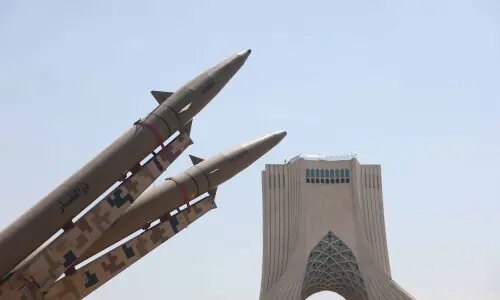
Iran: Iran’s constitution and other laws and policies do not protect religious freedom, and in practice, the government severely restricted this right. The government prohibits Bahais from teaching and practicing their faith and subjects them to many forms of discrimination not faced by members of other religious groups.
North Korea: Although the constitution and other laws and policies provide for religious freedom, in practice the government severely restricted religious activity, except for some officially recognised groups that the government tightly supervised. Genuine religious freedom does not exist. Government practices continued to interfere with individuals’ ability to choose and to manifest their religious beliefs.
Saudi Arabia: Freedom of religion in Saudi Arabia is neither recognised nor protected under the law and the government severely restricted it in practice. Sunni Islam is the official religion. Authorities beheaded at least one individual for engaging in “sorcery.” Some Muslims who did not adhere to the government’s interpretation of Islam faced significant political, economic, legal, social, and religious discrimination, including limited employment and educational opportunities, under representation in official institutions, restrictions on religious practice, and restrictions on places of worship.
Sudan: The Secretary of State first designated Sudan as a CPC in 1999, and most recently redesignated it in August 2011. Consequently, the country was ineligible for aid under Section 116 of the Foreign Assistance Act of 1961. The government at times enforced laws against blasphemy and defaming Islam. Authorities harassed religious practitioners of unregistered groups and limited the freedom of the four registered religious groups. There were instances of abuse and mistreatment.
Uzbekistan: The government continued to deal harshly with Muslims who discussed religious issues outside of sanctioned mosque... imprison individuals based on charges of extremism; raid religious and social gatherings of unregistered and registered religious communities; confiscate and destroy religious literature, including holy books; and discourage minors from practicing their faith. There were numerous reports of beatings and mistreatment of prisoners serving sentences for religious convictions. Nongovernmental sources reported that authorities severely mistreated persons arrested on suspicion of “religious extremism” or participating in underground Islamic activity, citing torture, beatings, and harsh prison conditions. Family members typically reported that the body of the prisoner showed signs of beating or other abuse, but authorities pressured them to bury the body before a medical professional could examine it.