0
0
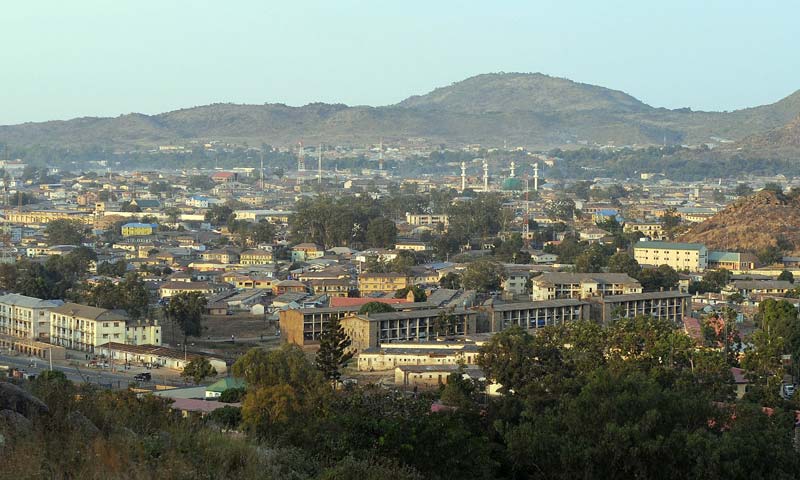
LAGOS: Gunmen in central Nigeria's Plateau state killed 37 people in a pre-dawn raid Tuesday, the military said, the latest unrest to hit the area gripped by a decade-long sectarian conflict.
“At about 2:00 am (0100 GMT) unknown gunmen carried out an attack” in four villages, said area military spokesman Salisu Mustapha.
“The attackers killed... 13 persons in Katu Kapang, eight in Daron, nine in Tul and seven others in Rawuru.”
Plateau falls in Nigeria's so-called Middle Belt, on the dividing line between the mainly Christian south and predominantly Muslim north.
Mostly Muslim herdsmen from the Fulani-Hausa ethnic group have been blamed for scores of attacks on mainly Christian agriculturalists from the Berom ethnic community.
Fulani leaders say the Berom politicians who control the state have systemically suppressed the rights of herdsmen, denying them access to desperately needed grazing land.
It was not clear who carried out the latest attack which hit the Barkin Ladi area, a hotspot in the protracted conflict.
Boko Haram Islamists, waging a brutal four-year insurgency in the north, have also attacked Plateau, but there was no immediate indication that the banned insurgent group was behind the latest violence.
Mustapha said “the gunmen fled on sighting the arrival of the troops” and that the situation was now “under control”.
Analysts say the conflict in Plateau has been intensified by provisions in Nigeria's constitution that give enhanced rights to so-called indigenous people.
The Berom and linked ethnic groups are the state's indigenes, giving them better access to education, land and political office.
Violence in Plateau “has led to ethnic cleansing that recalls the Balkans”, former US ambassador to Nigeria John Campbell wrote in July in The Atlantic magazine.
“Formerly mixed villages or neighbourhoods (in the capital Jos) now consist of only one ethnic group. If an outsider is detected, he risks being killed on the spot,” added Campbell, now with the Council on Foreign Relations (CFR).
The CFR, which tracks violence in northern and central Nigeria, counted “785 sectarian related deaths in Plateau state” between May 29, 2011 and June 30, 2013.
“These estimates are very conservative,” Campbell wrote.
“Victims are predominantly women, children and the elderly men are able to run off. Killings sometimes occur among close neighbours,” he continued.
Several peace processes in Plateau have mostly failed to stop the violence, with deep mistrust persisting between the state's politicians and the security forces.
Berom leaders have accused the military of supporting and at times co-operating with the Fulani but such allegations have not been proven.