0
0

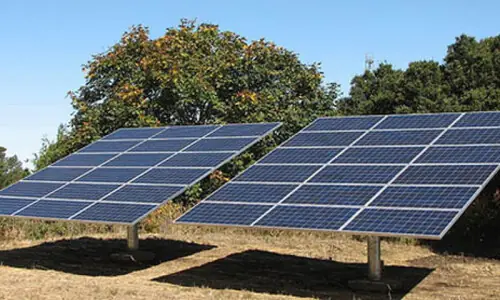
JAKARTA: The government is tendering as many as 80 projects related to the development of solar power plants in an attempt to boost the country’s renewable energy supplies.
The 80 projects will have a combined capacity of up to 140 megawatts (MW), according to Energy and Mineral Resources Ministry director general for renewable energy Rida Mulyana.
The ministry opened the tender starting last Thursday and is expected to announce the winners of the projects by this December.
“The solar plants’ construction will take about six months. Therefore, we will see the plants commence operation in the middle of next year,” Rida said as quoted by Antara news agency.
He added most of the solar power plants would be located in eastern Indonesia, such as in Papua, West Papua, Maluku, Sulawesi and Nusa Tenggara. Most of the power plants will have a 1 MW capacity while the biggest project will be located in Jayapura, Papua, with a 6 MW capacity.
According to Rida, at least nine units of power plants would be offered for development in East Nusa Tenggara (NTT) with a total capacity of 14 MW. He said seven locations in Papua would host solar power plants with a 14.5 MW capacity, six locations in North Maluku with a combined capacity of 7.5 MW, six developments in Maluku with 9.5 MW and another six projects in North Sulawesi with 13 MW.
There will also be three locations in Aceh hosting 4 MW solar power plants, six units in Riau with an 8.5 MW capacity, seven units in West Kalimantan with a 9.5 MW capacity, five unit plants in West Nusa Tenggara (NTB) with 17 MW and four units in East Java with a 4 MW capacity.
The 140 MW projects will need roughly 2.8 trillion rupiah in investment. Earlier this year, the government inaugurated the largest capacity solar power plant in Karangasem, Bali. The plant has a 1 MW capacity and cost 26 billion rupiah in investment.
The government has put aside 400 billion rupiah on the development of solar power plants this year.
According to the announcement on the renewable energy directorate’s website, the tenders of power plant projects have been open for development in Kupang, NTT and in North Lombok, NTB, with 5 MW and 2 MW capacities, respectively.
Despite abundant potential in renewable energy, the country remains heavily dependent on the fossil fuel for its electricity supply.
According to a report in the renewable energy directorate general, the country’s solar power plants’ installed capacity had reached 59 MW as of early November.
Energy and Mineral Resources Minister Jero Wacik said the country had a solar energy potential of 50,000 MW. “A number of companies came to us and said they wanted to build plants,” Jero said at an event recently.
Attempting to boost solar power plant development, the Energy and Mineral Resources Ministry issued last June Ministerial Decree no. 17 2013, which regulates the purchasing of electricity produced by photovoltaic solar power plants by state-owned electricity company PT Perusahaan Listrik Negara (PLN).
– By arrangement with the ANN/The Jakarta Post –