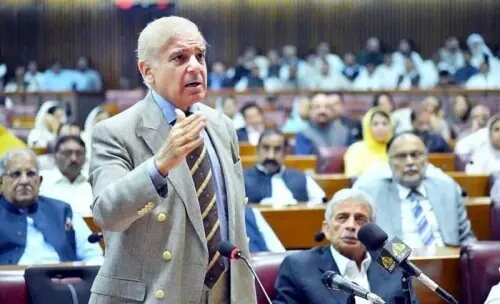
Born in 1956, Shah Mehmood Qureshi hails from a wealthy and influential feudal family based in Multan. He received his education at Lahore’s Aitchison College, followed by an undergraduate degree from the Forman Christian College after which he went to the United Kingdom to study for a law degree from the University of Cambridge.
Qureshi started off in politics in 1985 and associated himself with the Pakistan Muslim League (allying with Nawaz Sharif), before he joined Pakistan Peoples Party — only to leave it for PTI. He has held powerful positions in the parties he has been associated with.
Qureshi was elected to the Punjab Assembly in 1985, 1988, and 1990 and also served as Punjab’s Finance Minister at one point. He switched over to PPP and was elected to the National Assembly in the 1993 election, serving as Minister of State for Parliamentary Affairs during Benazir Bhutto’s government. He lost the election in 1997 (to former PML-N-current-PTI Javed Hashmi) but bounced back in 2002 as an MNA.
From 2000 to 2002, Qureshi served as Multan’s district nazim. He however resigned from the office to contest for the National Assembly on a PPP ticket (2002-2007).
In 2006, Qureshi, a gifted orator, was made president of PPP’s Punjab chapter. Following the 2008 election, he was considered a serious candidate for the post of prime minister. The position was however given to Yousuf Raza Gilani and Qureshi was handed the foreign ministry portfolio instead. According to a Wikileaks cable, the decision to keep the coveted prime minister post away from Qureshi had much to do with mistrust within the party of Qureshi’s past political affiliations, as well as his rivalry with Gilani in Multan.
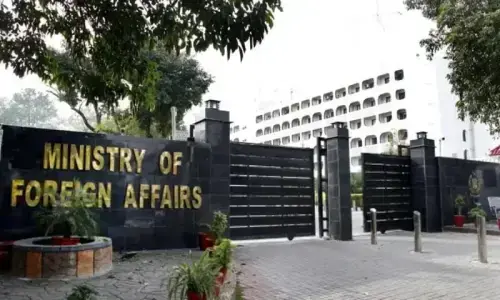
As foreign minister, Qureshi dealt with various crises pertaining to Pakistan’s foreign relations in the wake of events such as the Mumbai attacks in 2008 and the Raymond Davis debacle.
A spiritual leader to many, the current PTI heavyweight exercises considerable influence in his home constituency of NA-148. His powerful position in PPP, meanwhile, took a plunge in the aftermath of the Raymond Davis fiasco, allegedly due to his stand against granting diplomatic immunity to Davis. Eventually, Qureshi resigned from PPP as well as from his National Assembly seat. By this point, the foreign ministry portfolio had also been taken away from him.
Days after his resignation from PPP, he announced at a rally in Ghotki that he was joining PTI. Since then, the PTI vice-chairman has remained an important figure for Imran Khan’s party, giving it electoral viability. Qureshi has remained a rather controversial figure even within PTI, reportedly due to tensions between himself and his traditional rival Hashmi.
— Research and text by Heba Islam