0
0

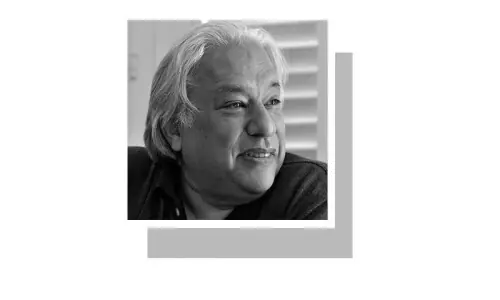
The winner of the first Faiz Ahmad Faiz Award 2013 is Idris Babur (38). He receives the award for his poetry book Yunhi, which means “Like Now, Always” or “By the way”. The award will be presented to the writer at an event after the summer holidays.
This is Idris Babur’s debut book. Earlier, he has published extensively in literary journals and anthologies.
He has translated works into Urdu from other languages, mainly Punjabi and English, but also from Norwegian.
Norway has been Idris Babur’s adopted homeland for more than a decade until he returned to his country of origin a few years ago.
“I live in Islamabad but travel often to Lahore, and sometimes to Karachi and elsewhere. Although I have very few relatives in Pakistan, I still feel at home here, and I feel at home in Norway, too”, Irdis Babur adds.
“I did well in science subjects at school and won many prizes for that, making my parents proud. They forced me to study science further, and so I became an engineer. But I have come to realise that art and literature subjects are also important, and politics, for that matter”, Idris Babur says.
Under the statutes of the Faiz Foundation Trust, the trust shall “promote the progressive and humanistic ideas of Faiz Ahmad Faiz”, one of Pakistan’s highly acclaimed writers. The trust is chaired by his daughter Salima Hashmi.
Yunhi has been much talked about in the literary circles of Pakistan since it came out last year.
Critiques have underlined that the poems are both in the common ghazal tradition and at times in entirely different forms.
And they are certainly not just in the old romantic style, but encompass realism in a modern form, also building on Persian and Arab poetry traditions.
“I think it is important that we today don’t only use our mind, but also our heart and our social intelligence”, Idris Babur says.
“Teenagers in particular are nowadays so much into gadgets that they can easily forget to live normal lives”, he says.
“When I grew up in Lahore we had a lot of simple and inexpensive fun with friends. We had great birthday parties and other gatherings where everyone attended, old and young, relatives, neighbours and friends. Today, children just send Facebook or SMS messages to each other instead of meeting.”
“A typical birthday gift today could mean getting a new mobile phone or a laptop. But less time would be set aside to be with friends and relatives.”
“Yet, in Pakistan, we have a great family culture and we must maintain it. In Norway, I am actually less afraid of technology changing life since they have so many organisations for children and youth. Everyone must attend clubs in sports, music, scouting, and so on. But the spontaneous meeting points are fewer there than in Pakistan.”
Idris Babur says his book reflects his school and university years, and he has dedicated the book to his late parents. “My next book should be dedicated to the next generation and the many important people I have met in my life,” he adds.
“It is unfortunate that it is difficult to make a living out of writing poetry and other literary work”, Idris Babur says. “When I am in Pakistan, I do translations. I work for various literary organisations if they need my help. In 2010, I selected the entries for the national publication of poetry for the Pakistan Academy of Letters. That was an honour and I learned a lot about current Urdu poetry.”
Idris Babur’s translation of contemporary Norwegian poetry should also be mentioned.
This work has been appreciated by his “other homeland”, notably the organization NORLA, which promotes Norwegian literature abroad.
Literary friends consider Idris Babur a Pakistani-Norwegian ambassador between two cultures. The Pakistani immigrant community in Norway is close to 40,000 in a population of 5 million.
“When I lived in Norway, I had an ordinary day job because Oslo is one of the world’s most expensive cities and income from poetry will not take you far. I didn’t get time to write much there. I had to come back to Pakistan to do that”, Idris Babur says.
“It is wrong that the society pays so little for poetry and other literary work”, Idris Babur underlines. “A poet is a pilgrim pit against odds”, he says.