2
2
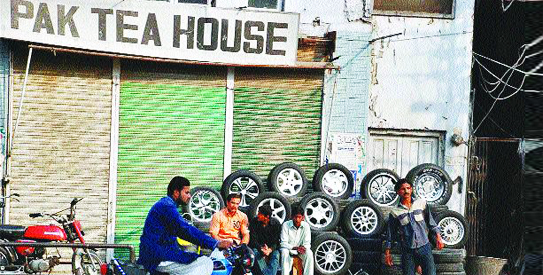
LAHORE: The Pak Tea House, once the hub of intellectual debates and literary discussions, is being revived within the next two weeks.
“The premises has been got vacated and we will open it for people of diverse backgrounds to voice their opinions in a non-judgmental atmosphere again,” Young Men’s Christian Association Lahore General Secretary Samuel Pervez told Dawn on Thursday.
Owned by the YMCA, the Tea House proved to be a place where people could freely express their political views even during the repressive regimes of generals Ayub Khan and Ziaul Haq. YMCA asked its tenant Sarajuddin to vacate the place but the matter was taken to a court of law. All literary figures and people had protested and the court announced that poets and writers were the soul of a society so this place could not be used for any other purpose. After Sarajuddin’s death, his son Zahid Hasan continued with its possession. Because of financial constraints and health problems, he wanted to open a garments or tyre shop. A court of law was again approached where the matter remained pending. Meanwhile, the Tea House was closed down and the place was occupied by a cloth trader and a tyres merchant. A squad of the city district government of Lahore retrieved it on Thursday night after the court decided the matter in favour of YMCA. The CDGL handed over its possession to the YMCA which plans to return a heritage to Lahorites.
Intellectual Shahzad Ahmed was among the regular visitor to the place when he used to live at Nisbet Road. “I have shifted near the airport now. It will not be easy to frequent the place but I will definitely come here. It’s a very good news, indeed,” he said.
Terming the revival of the Tea House a good omen, columnist Shafqat Tanvir Mirza recalled that giants like Faiz Ahmed Faiz, Ibne Insha, Ahmad Nadeem Qasmi, Intizar Husain, Ahmed Faraz, Saadat Hasan Manto, Muneer Niazi, Mira Ji, Kamal Rizvi, Nasir Kazmi, Prof Sayyid Sajjad Rizavi used to frequent the place.
Writer Shahid Mahmood Nadeem said the role of the `inhabitants’ of Pak Tea House in creating and promoting political awareness among the people of Lahore in particular and other parts of the country in general cannot be undermined. “In an era of commercialism when people are confining themselves to the four walls of their houses, places like Pak Tea House are inevitable. There is no substitute to the process of collective intellectual debates that used to be held here,” he said.