8
8

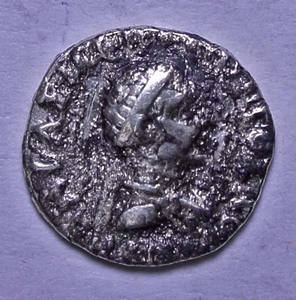
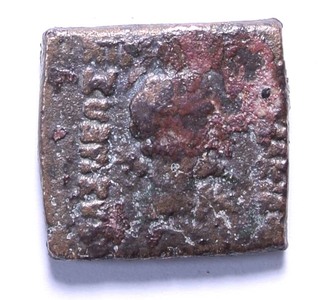
MINGORA: Archaeologists in their fresh excavations here at Bazira, Barikot, have discovered large layers of the Indo-Greek city with weapons and coins as well as important pottery forms imported from Greek Bactria and from the Mediterranean area in second century BCE.
Dr Luca Maria Olivieri, head of the Italian Archeological Mission in Pakistan, told Dawn that during their recent excavation in April-June his team unearthed some very important discoveries in Bazira, Swat.
The team was formed by Italian and Pakistani archaeologists, including Elisa Iori of Bologna University, Cristiano Moscatelli of Naples University and Amanullah Afridi and Syed Niaz Ali Shah of the KP Directorate of Archaeology And Museums. Excavation trainings at Barikot are funded by the Pakistan-Italian Debt Swap Programme.
Weapons, coins and pottery also found in fresh excavations
“Very little is known in the archaeology of the sub-continent about the material culture of the Indo-Greek. However, this time we discovered at Barikot ample layers associated not only to the Indo-Greek city (when the settlement was encompassed by the Defensive Wall, 2nd BCE), but also to the pre-Greek city, the Mauryan settlement (3rd BCE),” he said, adding that outside the Indo-Greek defensive wall extensive evidence of the proto-historic village (Gandhara Grave Culture; 7th-8th century BCE) were also found.
He said that during the recent excavations they also discovered a large late-Kushan Temple with four pillars on the northern part of the excavated area (3rd century CE). “This is the third coeval public cultic space found in the late city, and it is confirming the existence of Buddhist architecture, which has nothing to do with the mainstream stupa-cum-viharas layout of the contemporary Buddhist complexes. Vice-versa, these new architecture have more in common with Central Asian coeval examples and antecedents,” he added.

He said that during the excavations the archaeologists also discovered that all the pre-Greek layers were artificially destroyed and obliterated along the Defensive Wall at the time of its construction, to make space to the fortification, revealing conspicuous traces of the Iron Age village (7th BCE).
Dr Luca said that his team was currently excavating one hectare with a stratigraphy from 7th BCE to 3rd CE in Bazira. The area corresponded to circa 1/12 of the entire city. “The KP government is about to acquire all the excavated areas and a large buffer area around them. We are really grateful to the efforts of the provincial department of archaeology and the government,” he said.

Terming the archaeological site of Barikot one of the largest and most important sites in future, he claimed: “I foresee that in future Barikot will become one of the largest and long-lasting excavation projects in Pakistan (30 years so far) if not in the entire sub-continent. It already represents the only Indo-Greek city excavated at that scale, and one of the few examples of a Kushan urban settlement scientifically excavated in South Asia.”
Published in Dawn, June 26th, 2016