0
0
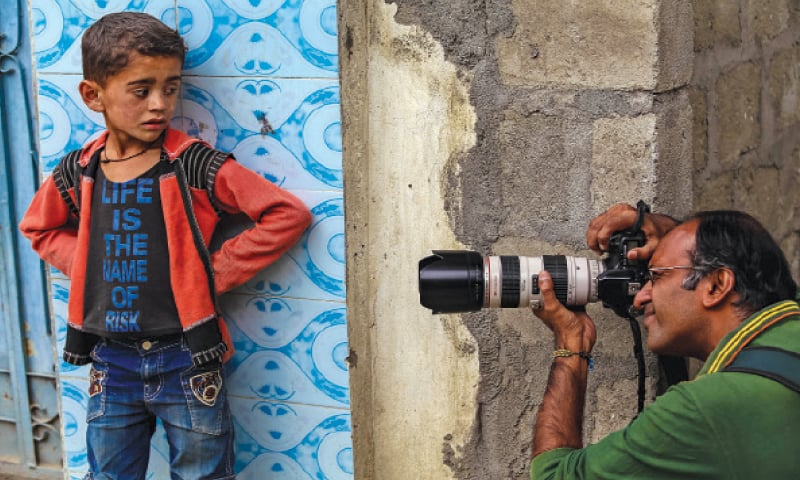
His romance with common people and their movements dates back to his early childhood when his father would send him with homemade glue and a bag full of posters to be pasted on the walls of Faisalabad, during the early 80’s popular Movement for the Restoration of Democracy (MRD) against the Zia regime.
A documentary photographer and filmmaker, Umair Ghani, was born to Marxist activist Irshad Ahmad Khan, who used to hold political meetings frequently with his comrades, including Dr Maqbool Akhtar and Major Ishaq, at his house.
“I used to be a serious reader and a keen observer; politically charged environment of the city and company of these legends planted the seeds of resistance, romance and struggle in my heart at a very tender age,” he vividly recalls.
While working as a lecturer with the Punjab government, he volunteered for posting to rural areas.
“I was amused to see the rich cultural activities of rural Punjab, especially their festivals and traditional sports such as wrestling, bull race and tent-pegging. In a tent-pegging competition at Rajoya Sadaat, Chiniot, I was surprised to see more than 650 riders participating with zest and zeal,” he says.
During posting at Government College Samundari, one of his colleagues, Abdul Razzaq Vance, a photographer and frequent visitor to the northern areas, convinced him to do photography.
 |
“I was more into enjoying and absorbing the beauty of nature, but he believed that with my political consciousness, theoretical knowledge of art and passion for the culture of common people, I can make photography a resolve and expression,” he adds.
After exposing the first film and seeing his photographs, he got hooked to photography. With a solo and numerous group shows in Pakistan and abroad to his credit, he has been working in various genres of photography for more than two decades.
Everyone would suggest him to go for commercial works such as wedding and product shoots, rather than exposing the poor folks until 2006 when an Australian postcard company purchased one of his clicks depicting early morning scene at the shrine of Shah Rukn-i-Alam, Multan.
“Pursuit of art is considered waste of time in our society; that small pat on my back gave me a big push,” he admits.
Visitors to shrines and archaeological sites are his major subjects. To capture them, he travels to various shrines, especially in Punjab and Sindh. “The purity of their soul and firm faith is always a strong inspiration for me.”
“While shooting monuments and archaeological sites, I always compose common people with the buildings made by rulers exploiting masses. Kings and rulers are dead, the common folks are true custodians of art and heritage,” he believes.
His works were awarded four times during 2004-08 at International Photographic Salon of Japan. Umair is grateful to Nisar Mirza, Nadeem Khawar and Aasim Akhtar for being the permanent sources of energy and for helping him to resolve his technical and conceptual issues.
Unhappy with discrimination at art schools towards photography, he is making short documentary films for the last couple of years to initiate a conceptual debate on various aspects of this genre.
His short film discussing the images of Partition of 1947 by an American photographer is well received by contemporary image makers. People living with dignity of human character amid socio-political and economic chaos are the prime focus of his artistic ventures.
Working with a passion for beauty and sound sense of composition he believes in sanctity and virginity of image and presents them without post-production alterations.
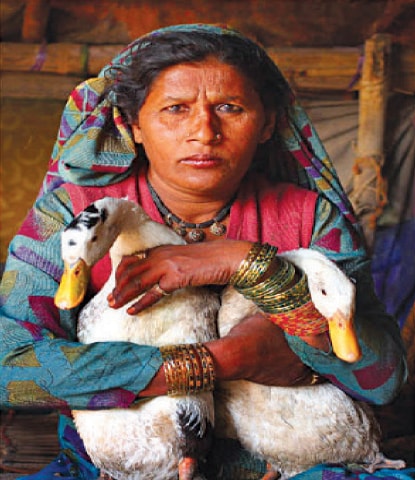
To capture the real spirit and aura of the people he used to stay and live with various ethnic groups, which differentiates his works from ‘tourist’ photographers.
It seems that Umair establishes a soft relationship with his subjects and looks at them with care and tenderness; in return the subjects look back at him as a friend, not as a camera. So their features and expressions retain the evidence of human connectedness.
Published in Dawn, May 31st, 2015
On a mobile phone? Get the Dawn Mobile App: Apple Store | Google Play