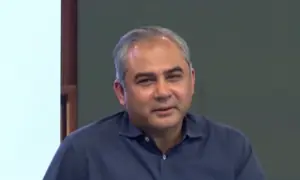
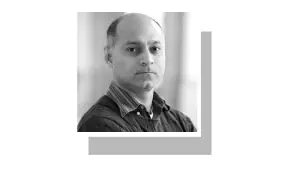
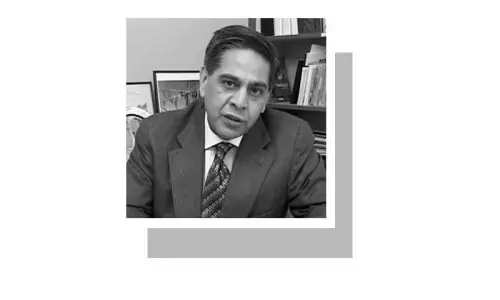
ISLAMABAD, Feb 6: Masood Sharif Khattak, a former Intelligence Bureau (IB) chief and now leader of the Pakistan Tehrik-i-Insaaf, strongly defended before the Supreme Court on Wednesday former prime minister Benazir Bhutto’s decision to increase secret service funds and then withdraw it, between 1988 and 1990, from the accounts of the civilian intelligence outfit.
The activation and rejuvenation of the IB became all the more inevitable and raising the secret service funds became necessary because the military-run secret intelligence agencies (ISI and MI) were not reporting to the country’s civilian chief executive as extensively as they did to military dictator late Gen Ziaul Haq, said Mr Khattak in a nine-page statement submitted to the court.
“Even if the government of that time (first stint of Benazir Bhutto in 1988) fought back to keep the infant democracy of that era intact, it would still be a step in the right direction,” he said, adding that the funds were indeed spent on furthering national interest.
A three-judge bench, headed by Chief Justice Iftikhar Muhammad Chaudhry, had taken notice of a report which appeared in an English daily alleging that Rs270 million had been withdrawn by the PPP government to dislodge the Punjab government in 2008-09, but the plot did not materialise because of the insistence of the PML-Q to install its chief minister in the province. The report also claimed that Rs360m had been withdrawn by the PPP government in 1988-90 to buy loyalties of parliamentarians, bureaucrats, etc to win elections in Azad Kashmir and to remove the government in the then NWFP and install Aftab Sherpao as chief minister.
Masood Khattak, who watched the events that took place between 1988 and 1990 from a ringside seat, explained that in reality the prime minister was the highest intelligence officer on the civil side and the flow of secret service funds on his or her orders was perfectly legal and administratively proper.
He said the powers that be utilised the intervening period between the Nov 16 elections and transfer of power to Ms Bhutto (Dec 2, 1988) in attempts to cobble together an anti-PPP coalition in order to stop her ascent to power.
At the same time, negotiations were also going on with Benazir Bhutto to make it clear to her that there were some no-go areas in case she rose to premiership. She was told that she would have to retain people like then president Ghulam Ishaq Khan, foreign minister Sahibzada Yaqoob Khan and adviser on finance V.A. Jaffery.
Mr Khattak said Ghulam Ishaq had soon become a key player in all games played against the then constitutionally-elected government of Ms Bhutto, supported and prompted by former army chief Gen (retd) Mirza Aslam Beg, an unquestioned master of his own actions and thinking.
When it became obvious that Ms Bhutto was not going away on her own and instead firming up her grip on power, a no-confidence vote against her government was tabled in the National Assembly by Islami Jamhoori Ittehad.
The moving force behind the no-confidence motion, Mr Khattak alleged, was Gen Aslam Beg and then MI director general Lt-Gen Asad Durrani. The army was not involved institutionally.
At the time of no-confidence vote, president Ishaq Khan, the then Punjab government of Nawaz Sharif and Gen Aslam Beg were on one side whereas Ms Bhutto had been reduced to the limits of the Islamabad capital territory with no access to intelligence, Mr Khattak said. The isolated Ms Bhutto was thus heavily dependent on the IB for intelligence about unconstitutional political developments and a host of other things.
“I must say in unambiguous terms that even if any government, when placed under extreme unconstitutional pressures, does spend funds to ward off unconstitutional steps aimed at dismantling that government there would be nothing illegal about it,” Mr Khattak said.
About the increase in IB allocation in 1989-90, he explained the institution had become completely redundant during the rule of president Gen Ziaul Haq. The IB began to start breathing as an effective agency only after the civilian government of Benazir Bhutto came to power in Dec 1988.
Mr Khattak said he had appeared before the LHC as a prosecution witness in a corruption reference sent by an accountability cell in the Presidency on the order of Ishaq Khan. The Supreme Court directed its office to contact the LHC registrar to get an update on the case.